If you strike upon a thought that baffles you, break off from that entanglement and try another, so shall your wits be fresh to start again. Aristophanes (c. 446 – c. 386 BC), ancient Greeks playwright
True wisdom consists not in seeing what is immediately before our eyes, but in foreseeing what is to come Terence (195/185–159 BC), Roman playwright
Fortune favors the brave. Terence
Don’t be satisfied with stories, how things have gone with others. Unfold your own myth. Rumi (September 30, 1207 –December 17, 1273), Persian poet and Sufi mystic
Inside you there’s an artist you don’t know about…Say yes quickly, if you know, if you’ve known it before the beginning of the universe. Rumi
There is a community of the spirit. Join it, and feel the delight of walking in the noisy street and being the noise. Drink all your passion, and be a disgrace. Close both eyes to see with the other eye. Rumi
Sell your cleverness and buy bewilderment. Rumi
Let the beauty we love be what we do. There are hundreds of ways to kneel and kiss the ground. Rumi
As one who sees in dreams and wakes to find the emotional impression of his vision still powerful while its parts fade from his mind – Just such am I, having lost nearly all the vision itself, while in my heart I feel the sweetness of it yet distill and fall. Dante Alighieri (c. 1265–September 9, 1321), Italian poet (Paradiso)
The pen is the tongue of the mind. Miguel de Cervantes (September 29,1547–April 22,1616), Spanish novelist
The earth has music for those who listen. William Shakespeare (April 26, 1564–April 23, 1616), English poet and playwright
Personality is everything in art and poetry. Johann Wolfgang von Goethe
The tree which moves some to tears of joy is in the eyes of others only a green thing that stands in the way. Some see nature all ridicule and deformity … and some scarce see nature at all. But to the eyes of the man of imagination, nature is imagination itself. William Blake (November 28, 1757 –August 12, 1827), English poet and painter
To create a little flower is the labour of ages. William Blake
The imagination is not a state: it is the human existence itself. William Blake
Genius… means little more than the faculty of perceiving in an unhabitual way. William James (January 11, 1842 – August 26, 1910), American psychologist and philosopher
The essence of genius is to know what to overlook. William James
The art of being wise is the art of knowing what to overlook. William James
Belief creates the actual fact. William James
In the dim background of our mind we know what we ought to be doing but somehow we cannot start. William James
Geniuses are commonly believed to excel other men in their power of sustained attention . . . But it is their genius making them attentive, not their attention making geniuses of them. William James
Seek out that particular mental attribute which makes you feel most deeply and vitally alive, along with which comes the inner voice which says, ‘This is the real me,’ and when you have found that attitude, follow it. William James
The creative writer does the same as the child at play. He creates a world of fantasy which he takes very seriously–that is, which he invests with large amounts of emotion–while separating it sharply from reality. Language has preserved this relationship between children’s play and poetic creation. Sigmund Freud (May 6, 1856 –September 23, 1939), Austrian psychiatrist and psychologist
The unreality of the writer’s imaginative world, however, has very important consequences for the technique of his art; for many things which, if they were real, could give no enjoyment, can do so in the play of fantasy, and many excitements which, in themselves, are actually distressing, can become a source of pleasure for the hearers and spectators at the performance of a writer’s work. Sigmund Freud
…a piece of creative writing, like a day-dream is a continuation of and a substitute for what was once the play of childhood. Sigmund Freud
Sigmund Freud (1856-1939) William Stern (1871- 1938)Joy Guilford (1897-1987)
2. Idea-Spurring Questions techniques, Checklists (G. Polya, A. Osborn, T. Eiloart, R. Crawford, J. Pearson, B. Eberle etc.).
2.1. Kipling technique (5Ws / H).
2.2. How to solve a problem by G. Polya
2.3. Osborn’s Checklists
2.4. SCAMPER – Creative technique for ideation
2.5. Five Why – interrogative technique
2.6. The Phoenix checklist – Creative Thinking Technique
Universal explanatory Matrix of theories about Genius
Genius (from Lat. genius – spirit) is a phenomenon of global scale and its mystery is commensurate with the disclosure of the most mysterious enigmas of Genesis, with the identification of the most universal laws of structure and development of the world.
Holistic system of theories about Genius
1. Attributive theories (from Lat. attributum – sign) identify the specific properties and distinctive features of genius and reveal of particularities of their relationships and manifestations. 2. Structural-functional theories (from Lat. structura-structure, order; from lat. functio – performance) revealing specific features of various integrated intrapersonal components and subsystems of genius, their peculiar combination, as well as their role and contribution to the creative genius self-fulfillment. 3. Procedural – dynamic theories (from Lat. Processus – the passage, progress, and from Greek. Δύναμις – “dynamis” power, force ) reveal laws of sequential change of life forming stages of genius becoming , discover the conditions and factors of its origin, existence and development. 3.1. Genetics theories (from Lat. genesis – birth, origin) revealing the causes of genius , and defining the main determinants of its formation and development; 3. 2. Evolutionary theories (from Lat. Evolutio – unfolding, unrolling) reveal laws and mechanisms of genius formation, as a result of the objective process of development of nature and culture. 3.3. Transnormality theories (from Lat. trans – re, for, norma- norm, rule) see the causes of genius in various aberrations, anomalies in the mental and physical health, in the peculiarity of life circumstances and development, in the strangeness of lifestyle and behaviour. 4. Essential theories (from Lat. essential – the essence) reveal the essence and basic dimensions of genius, as well as deep essential determinants of its manifestation.
One fine day in harvest, Tom Fitzpatrick went strolling along the sunny side of a hedge.
All of a sudden he heard a clacking noise in the hedge before him. Tom tiptoed on, trying to see what was making the noise.
By its side sat a little old man, with a little cocked hat stuck upon the top of his head, and a leather apron hanging before him.
“Amazing!” said Tom to himself, “This must be a Lepracaun; I’m a rich man.
Tom knew very well, that Lepracauns always have a crock of gold buried in some hiding-place or another.
Tom caught the Lepracaun in his hand.
“Tell me where is your gold. Show me this place now!” – shouted Tom.
He looked so wicked that the little man immediately answered: “My pot of gold is hidden only a couple of fields off.”
So they went, and Tom held the Lepracaun fast in his hand, though they had to cross hedges and ditches, and a crooked bit of bog, till at last they came to a great field all full of boliauns.
The Lepracaun pointed to a big boliaun, and said: “Dig under that boliaun, and you’ll find a great pot filled with guineas.”
Tom hadn’t brought a spade, so he took off one of his red garters and tied it around the boliaun, so that he could find the place again later.
Then he said to the Lepracaun:
“Swear to me that you’ll not take that garter away from that boliaun!”
The Leprechaun swore right away that, Faith, he wouldn’t so much as touch it.
“You may go,” Tom said, releasing his grip.
“Goodbye, Tom Fitzpatrick, may what you find do you much good.” – leprechaun said him politely.
Tom ran home, got a spade, and then ran back to the field of boliauns.
When he got there, he realized that Leprechaun outwitted him, although he kept his word and hadn’t touched neither to his garter nor to flower.
A father was busy with his work while his little daughter constantly distracted him in an attempt to make him play with her.
To keep her busy, the man tore a page of a printed map of the world from a magazine into pieces and asked her to go put it together to make the map again.
The daughter was very young and he was sure she would take the whole day to get it done. But the smiling daughter came back within minutes with perfect map.
When he asked how she could do it so quickly, she said:
Ariana Grande Ariana Grande-Butera born June 26, 1993, Boca Raton, Florida, US Nationality: United States of America Category: Celebrities Occupation: Singers Specification: Pop, R&B. Unique distinction: Ariana Grande is pop music sensation and a highly admired singer and actor today. She is famous as Cat Valentine in “Victorious” (2010 – 2013) (TV). Height: 5’ 3” (159 cm); Weight: 104 Lbs (47 kg). Measurements: 32-24-33,5 (US) or 81-61-85 cm (EU) (2018).
Ariana Grande. Photo InRock Magazine (Japan)Ariana Grande. Photoshoot for Inrock magazine JapanAriana GrandeAriana GrandeAriana GrandeAriana Grande
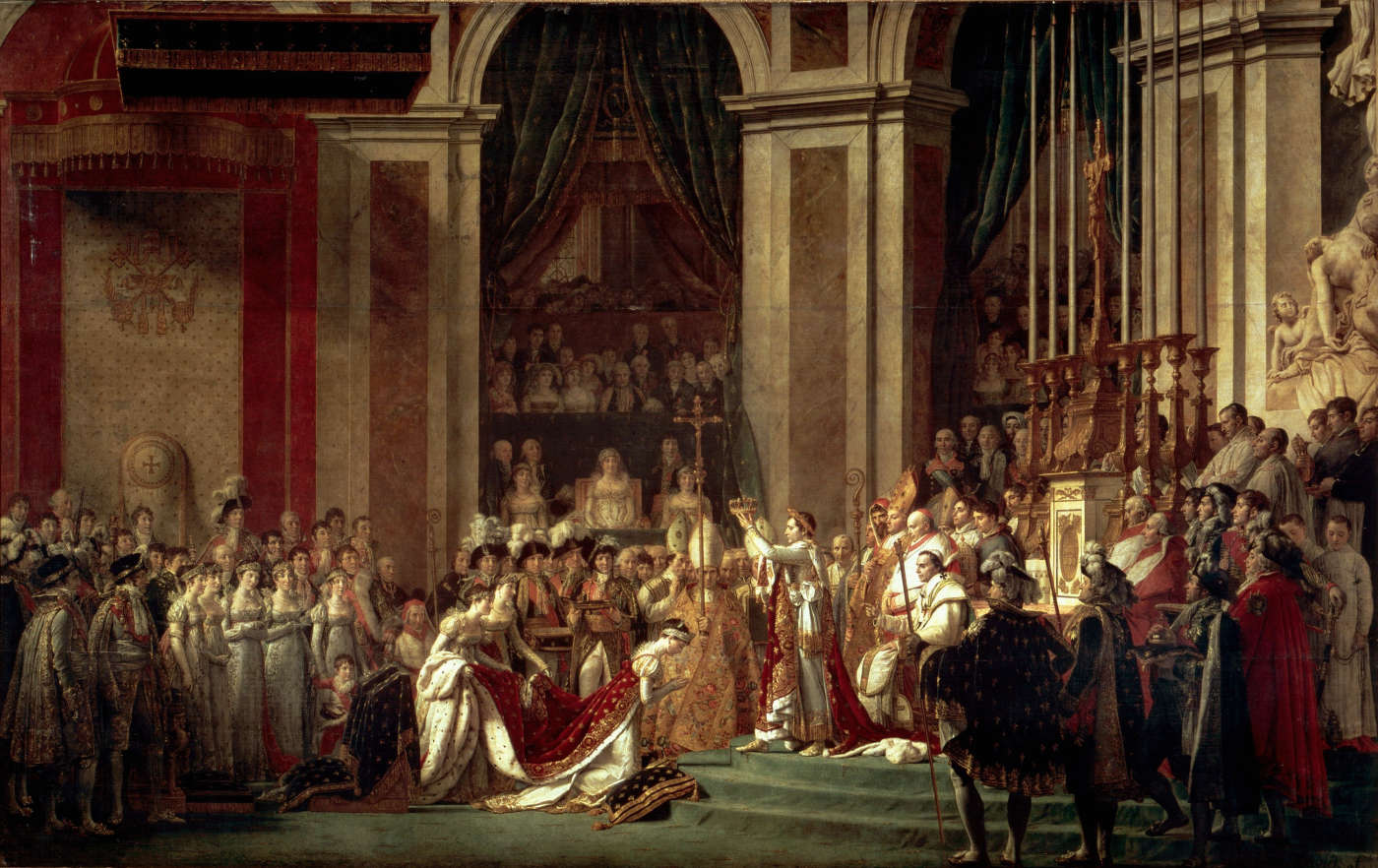
In 1804, Napoleon Bonaparte desired to take the title of Emperor in order to possess a great Western empire, just as his idol Charles the Great. However, like his famous predecessor, he was to be crowned by Pope that was believed by hundreds of millions of people, including the French.
At the same time his pride, military might and distrust of the Pope prevented the desire to possess a crown.
Bonaparte had a real-life problem that was based on a collision of two opposite desires: to be or not to be crowned.
Napoleon resolved this contradiction with his usual genius:
The ingenious inventor, the savvy entrepreneur, the innovative scientist, the imaginative writer… No matter what our field or area of expertise, we all seek to be more creative and innovative. We all want to be original.
Many of us regard creativity as an awe-inspiring, almost magical gift that some people are simply born with. But just as creativity can be expressed in many different ways, it can also be learned and sharpened like any other skill.
In the modern world, there is no room for the humdrum or mundane. A clever and inventive mind opens doors to success. Here are five ingenious ways you can begin training your mind to be more creative and innovative.
1. Seek to use both sides of your brain.
Don’t fall for the myth that right-brained people are more creative while left-brained people are more analytical. True creativity comes from using both sides of your brain.
The most imaginative ideas must be logical and rational in order to work. The most scientific and analytical of approaches must still be unique, thoughtful and ingenious.
Roger Sperry’s research into his split-brain hypothesis in the 1960s showed that some activities, such as spatial reasoning and appreciation of beauty, stimulate the right hemisphere of the brain, while things like analytical thinking and language stimulate the left hemisphere.
But creativity requires a whole-brained approach because it requires lateral thinking, or thinking about things in new ways. When we “think outside the box,” we devise fresh approaches to solving problems and meeting challenges.
Work to build your whole brain by using both right and left sides. Try juggling or doing origami, or just do daily activities like writing your name or brushing your teeth with your non-dominant hand.
Start looking at things differently — literally — by wearing your watch upside down or using your phone upside down. Try writing backward: it worked for Leonardo da Vinci, who wrote his notes in “mirror writing.”
2. Cultivate a thirst for knowledge.
A lifelong thirst for knowledge will fuel your creativity. A thoughtful and intelligent mind demands a constant flow of information. By continually learning and growing, you feed your mind with ideas and expand your thinking. Seek to be broad-minded and open to new concepts and approaches.
This includes being willing to try different ideas and not just dismissing something you disagree with out of hand. Communication isn’t a one-way street. It means being willing to question everything, to keep yourself motivated and curious about the world around you.
Work to develop both vertical knowledge, which is a deep dive into a particular topic, and horizontal knowledge, which means having a solid amount of understanding in a wide variety of fields.
Having a broad range of knowledge in different areas will give you the background to pull new ideas from. But being deeply familiar with one area will give you the insight necessary to innovate within that field.
3. Explain things back to yourself.
Being creative also requires that you understand the information you have been given. It’s one thing to read a book and study a subject, but it’s another thing entirely to be able to explain that topic to someone else (or yourself). Being able to explain new knowledge shows that you have processed and internalized the information on a deeper level.
If you can explain something back to yourself, you can also expand on it, reshape it in your own unique vision or integrate your own ideas. You can follow threads of ideas and create new concepts.
To be a good explainer requires you be a good listener. After all, you can’t fully absorb and retain information if you haven’t really heard what has been said.
Get in the habit of explaining things back to yourself to further solidify knowledge. This process can also help you think through areas that may be improved, which will boost your ability to brainstorm and build on concepts.
4. Take breaks to “switch on” your creative side.
Have you ever been hard at work at a task that required problem-solving, feeling like you’re on a roll, only to realize later your ideas were mostly redundant and uninspired?
According to Harvard Business Review, our natural inclination is to keep working on a problem even when we aren’t making headway. When working on an idea that requires creativity, we often reach a dead end without realizing it. Research shows that it’s crucial to take breaks at regular intervals to give your mind a chance to refresh.
Set a timer, and when it goes off, switch tasks. Do something else for a while, and then return to your original task. Doing this will help you switch on your creativity and keep your problem-solving productive and innovative.
If you’re having trouble, try approaching a problem from a different perspective. It may help to work backward, starting with the solution, or to turn a problem on its head and conceptualize it from a different angle.
5. Let your imagination run wild.
One of the best things you can do to hone your creativity is to tap into the natural imaginativeness and ingenuity that you had as a child. We loved to play and pretend as kids. We learned how to create imaginary worlds where anything was possible. We enjoyed challenging ourselves with games and tests of skill.
Give yourself time to let your mind wander, to explore, to daydream, and then use the ideas that surface as part of your brainstorming. Challenge yourself with creative exercises, such as doodling in a sketchbook or writing flash fiction.
Keep a journal of your ideas, however fantastical or impractical they might be. Giving your mind time to dream and problem-solve is a great way to build your creative muscle.
If you cultivate a mind that is imaginative, open to all possibilities, balanced, full of knowledge and refreshed frequently, your genius and creativity will start to flourish.

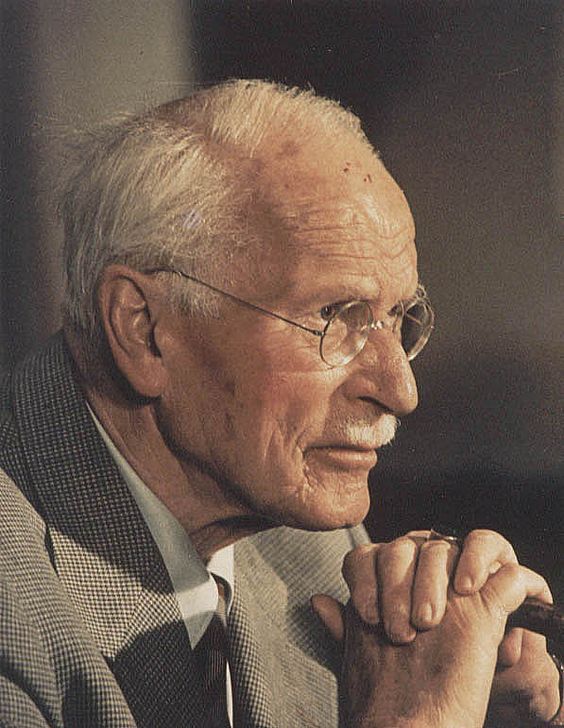 Genius… means little more than the faculty of perceiving in an unhabitual way.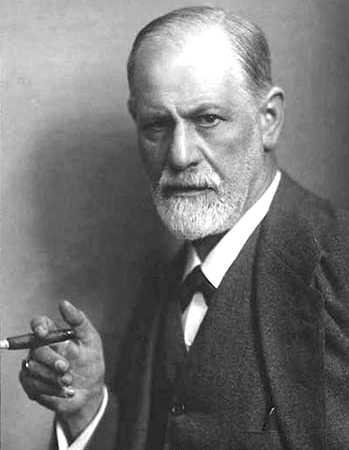


 I. Three pillars of activating creativity
 One fine day in harvest, Tom Fitzpatrick went strolling along the sunny side of a hedge.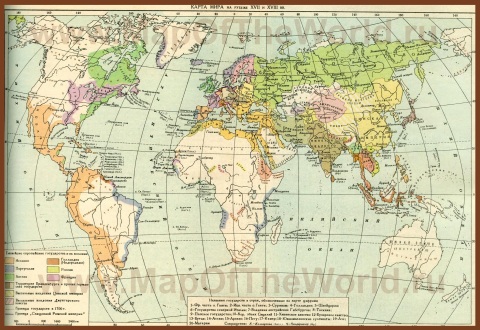






 Creative Vision
You must be logged in to post a comment.