Posts filed under ‘Creative Vision’
Inspirational Quotes from Famous Writers and Poets

If you strike upon a thought that baffles you, break off from that entanglement and try another, so shall your wits be fresh to start again.
Aristophanes (c. 446 – c. 386 BC), ancient Greeks playwright
True wisdom consists not in seeing what is immediately before our eyes, but in foreseeing what is to come
Terence (195/185–159 BC), Roman playwright
Fortune favors the brave.
Terence
Don’t be satisfied with stories, how things have gone with others. Unfold your own myth.
Rumi (September 30, 1207 –December 17, 1273), Persian poet and Sufi mystic
Inside you there’s an artist you don’t know about…Say yes quickly, if you know, if you’ve known it before the beginning of the universe.
Rumi
There is a community of the spirit. Join it, and feel the delight of walking in the noisy street and being the noise. Drink all your passion, and be a disgrace. Close both eyes to see with the other eye.
Rumi
Sell your cleverness and buy bewilderment.
Rumi
Let the beauty we love be what we do. There are hundreds of ways to kneel and kiss the ground.
Rumi
As one who sees in dreams and wakes to find the emotional impression of his vision still powerful while its parts fade from his mind – Just such am I, having lost nearly all the vision itself, while in my heart I feel the sweetness of it yet distill and fall.
Dante Alighieri (c. 1265–September 9, 1321), Italian poet (Paradiso)
The pen is the tongue of the mind.
Miguel de Cervantes (September 29,1547–April 22,1616), Spanish novelist
The earth has music for those who listen.
William Shakespeare (April 26, 1564–April 23, 1616), English poet and playwright
Personality is everything in art and poetry.
Johann Wolfgang von Goethe
The tree which moves some to tears of joy is in the eyes of others only a green thing that stands in the way. Some see nature all ridicule and deformity … and some scarce see nature at all. But to the eyes of the man of imagination, nature is imagination itself.
William Blake (November 28, 1757 –August 12, 1827), English poet and painter
To create a little flower is the labour of ages.
William Blake
The imagination is not a state: it is the human existence itself.
William Blake
Read more: Genvive
Psychologists and psychiatrists about creativity
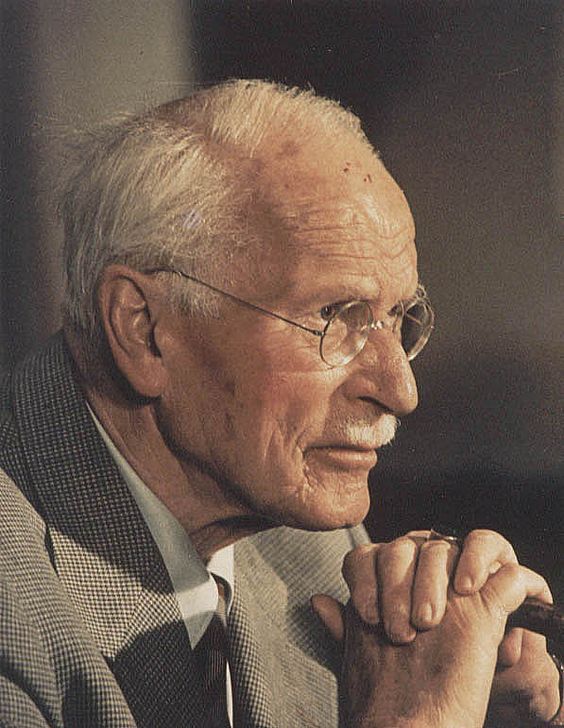 Genius… means little more than the faculty of perceiving in an unhabitual way.
William James (January 11, 1842 – August 26, 1910), American psychologist and philosopher
The essence of genius is to know what to overlook.
William James
The art of being wise is the art of knowing what to overlook.
William James
Belief creates the actual fact.
William James
In the dim background of our mind we know what we ought to be doing but somehow we cannot start.
William James
Geniuses are commonly believed to excel other men in their power of sustained attention . . . But it is their genius making them attentive, not their attention making geniuses of them.
William James
Seek out that particular mental attribute which makes you feel most deeply and vitally alive, along with which comes the inner voice which says, ‘This is the real me,’ and when you have found that attitude, follow it.
William James
The creative writer does the same as the child at play. He creates a world of fantasy which he takes very seriously–that is, which he invests with large amounts of emotion–while separating it sharply from reality. Language has preserved this relationship between children’s play and poetic creation.
Sigmund Freud (May 6, 1856 –September 23, 1939), Austrian psychiatrist and psychologist
The unreality of the writer’s imaginative world, however, has very important consequences for the technique of his art; for many things which, if they were real, could give no enjoyment, can do so in the play of fantasy, and many excitements which, in themselves, are actually distressing, can become a source of pleasure for the hearers and spectators at the performance of a writer’s work.
Sigmund Freud
…a piece of creative writing, like a day-dream is a continuation of and a substitute for what was once the play of childhood.
Sigmund Freud
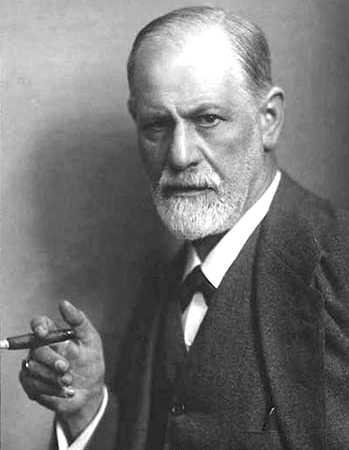


Sigmund Freud (1856-1939) William Stern (1871- 1938) Joy Guilford (1897-1987)
Creative problem solving and creativity techniques
 I. Three pillars of activating creativity
II. The classic methods of activating creativity
2.2. How to solve a problem by G. Polya
2.3. Osborn’s Checklists
2.4. SCAMPER – Creative technique for ideation
2.5. Five Why – interrogative technique
2.6. The Phoenix checklist – Creative Thinking Technique
4. Analogies Technique.
5. Metaphors Technique.
12.1. Classical variant (G.S. Altshuller).
Additional techniques
III. Special and modern methods
of creativity activation
Additional techniques
9. Bug List Technique.
Theories of Genius
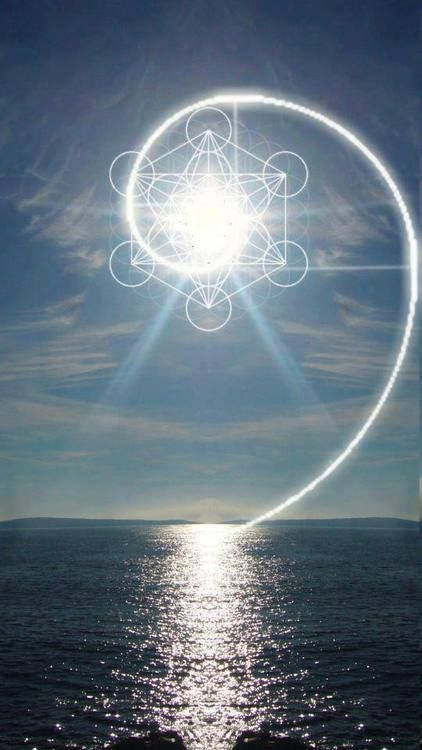
Universal explanatory Matrix of theories about Genius
Genius (from Lat. genius – spirit) is a phenomenon of global scale and its mystery is commensurate with the disclosure of the most mysterious enigmas of Genesis, with the identification of the most universal laws of structure and development of the world.
Holistic system of theories about Genius
1. Attributive theories (from Lat. attributum – sign) identify the specific properties and distinctive features of genius and reveal of particularities of their relationships and manifestations.
2. Structural-functional theories (from Lat. structura-structure, order; from lat. functio – performance) revealing specific features of various integrated intrapersonal components and subsystems of genius, their peculiar combination, as well as their role and contribution to the creative genius self-fulfillment.
3. Procedural – dynamic theories (from Lat. Processus – the passage, progress, and from Greek. Δύναμις – “dynamis” power, force ) reveal laws of sequential change of life forming stages of genius becoming , discover the conditions and factors of its origin, existence and development.
3.1. Genetics theories (from Lat. genesis – birth, origin) revealing the causes of genius , and defining the main determinants of its formation and development;
3. 2. Evolutionary theories (from Lat. Evolutio – unfolding, unrolling) reveal laws and mechanisms of genius formation, as a result of the objective process of development of nature and culture.
3.3. Transnormality theories (from Lat. trans – re, for, norma- norm, rule) see the causes of genius in various aberrations, anomalies in the mental and physical health, in the peculiarity of life circumstances and development, in the strangeness of lifestyle and behaviour.
4. Essential theories (from Lat. essential – the essence) reveal the essence and basic dimensions of genius, as well as deep essential determinants of its manifestation.
5 Brain Training Techniques to Cultivate Your Creative Genius
The ingenious inventor, the savvy entrepreneur, the innovative scientist, the imaginative writer… No matter what our field or area of expertise, we all seek to be more creative and innovative. We all want to be original.
Many of us regard creativity as an awe-inspiring, almost magical gift that some people are simply born with. But just as creativity can be expressed in many different ways, it can also be learned and sharpened like any other skill.
In the modern world, there is no room for the humdrum or mundane. A clever and inventive mind opens doors to success. Here are five ingenious ways you can begin training your mind to be more creative and innovative.
1. Seek to use both sides of your brain.
Don’t fall for the myth that right-brained people are more creative while left-brained people are more analytical. True creativity comes from using both sides of your brain.
The most imaginative ideas must be logical and rational in order to work. The most scientific and analytical of approaches must still be unique, thoughtful and ingenious.
Roger Sperry’s research into his split-brain hypothesis in the 1960s showed that some activities, such as spatial reasoning and appreciation of beauty, stimulate the right hemisphere of the brain, while things like analytical thinking and language stimulate the left hemisphere.
But creativity requires a whole-brained approach because it requires lateral thinking, or thinking about things in new ways. When we “think outside the box,” we devise fresh approaches to solving problems and meeting challenges.
Work to build your whole brain by using both right and left sides. Try juggling or doing origami, or just do daily activities like writing your name or brushing your teeth with your non-dominant hand.
Start looking at things differently — literally — by wearing your watch upside down or using your phone upside down. Try writing backward: it worked for Leonardo da Vinci, who wrote his notes in “mirror writing.”
2. Cultivate a thirst for knowledge.
A lifelong thirst for knowledge will fuel your creativity. A thoughtful and intelligent mind demands a constant flow of information. By continually learning and growing, you feed your mind with ideas and expand your thinking. Seek to be broad-minded and open to new concepts and approaches.
This includes being willing to try different ideas and not just dismissing something you disagree with out of hand. Communication isn’t a one-way street. It means being willing to question everything, to keep yourself motivated and curious about the world around you.
Work to develop both vertical knowledge, which is a deep dive into a particular topic, and horizontal knowledge, which means having a solid amount of understanding in a wide variety of fields.
Having a broad range of knowledge in different areas will give you the background to pull new ideas from. But being deeply familiar with one area will give you the insight necessary to innovate within that field.
3. Explain things back to yourself.
Being creative also requires that you understand the information you have been given. It’s one thing to read a book and study a subject, but it’s another thing entirely to be able to explain that topic to someone else (or yourself). Being able to explain new knowledge shows that you have processed and internalized the information on a deeper level.
If you can explain something back to yourself, you can also expand on it, reshape it in your own unique vision or integrate your own ideas. You can follow threads of ideas and create new concepts.
To be a good explainer requires you be a good listener. After all, you can’t fully absorb and retain information if you haven’t really heard what has been said.
Get in the habit of explaining things back to yourself to further solidify knowledge. This process can also help you think through areas that may be improved, which will boost your ability to brainstorm and build on concepts.
4. Take breaks to “switch on” your creative side.
Have you ever been hard at work at a task that required problem-solving, feeling like you’re on a roll, only to realize later your ideas were mostly redundant and uninspired?
According to Harvard Business Review, our natural inclination is to keep working on a problem even when we aren’t making headway. When working on an idea that requires creativity, we often reach a dead end without realizing it. Research shows that it’s crucial to take breaks at regular intervals to give your mind a chance to refresh.
Set a timer, and when it goes off, switch tasks. Do something else for a while, and then return to your original task. Doing this will help you switch on your creativity and keep your problem-solving productive and innovative.
If you’re having trouble, try approaching a problem from a different perspective. It may help to work backward, starting with the solution, or to turn a problem on its head and conceptualize it from a different angle.
5. Let your imagination run wild.
One of the best things you can do to hone your creativity is to tap into the natural imaginativeness and ingenuity that you had as a child. We loved to play and pretend as kids. We learned how to create imaginary worlds where anything was possible. We enjoyed challenging ourselves with games and tests of skill.
Give yourself time to let your mind wander, to explore, to daydream, and then use the ideas that surface as part of your brainstorming. Challenge yourself with creative exercises, such as doodling in a sketchbook or writing flash fiction.
Keep a journal of your ideas, however fantastical or impractical they might be. Giving your mind time to dream and problem-solve is a great way to build your creative muscle.
If you cultivate a mind that is imaginative, open to all possibilities, balanced, full of knowledge and refreshed frequently, your genius and creativity will start to flourish.

Creative vision of the World
Personality Creative Vision of the World is a complex hierarchical system consisting of values and worldview attitudes, emotional position to the world, as well as the creative method, understood as a multi-level techniques and as a tool and means of its transformation.
In the basis of holistic creative vision is a creative interaction with the world. This interaction has a complex, multi-level nature, which reflects the universal structure of all integrative objects. This fundamental, “going-all-the-way-through” structure is reflected in a hierarchical creative attitude of the personality, which includes axiological, cognitive, affective and behavioral components, where the first component is not the highest separated level of the structure, but its basic system-forming factor, the core and centre of organization.
Each of these components manifests itself through the means of the appropriate pairs of opposed, complement mechanisms of creativity:
Table 1. System of complementary mechanisms of Creativity
| Components | Pairs of Mechanisms |
| Axiological | Idealization – Problematization |
| Cognitive | Decentration – Simplification |
| Emotional | Identification – Meditation |
| Behavioral | Self-actualization – Personification |
These components are realized by means of the following social psychological mechanisms of creative activity: idealization, decentration, identification and self – actualization, and each of its mechanisms manifests itself in real creative activity in the form of concrete means, rules and techniques. The essential condition of creative interaction of a personality with an external world is the realization of a unified system of mutually connected mechanisms.
Idealization is understood as vision, seeking and revealing of the ideal nature of object, a mental constructions of its ideal image in which supreme values are harmoniously blended and the vital contradictions are resolved. It is creating and fulfillment of ideal plan and underlying task, generation of daring hypothesis, embodiment of pragmatic and aesthetic ideal, realization of ideal final result.
Problematization is a discovery and point thinning of vital contradictions of the object, a process of problem finding and problem determination. It is perception and search for shortcomings, blanks, discord, asymmetry and imperfections of the object. It is a strive for splitting of the united object, finding opposite features of phenomena, vision its dark sides and “shadows”.
Decentrationmanifests itself as a process of creation different approaches toward an object, changing one’s mind and taking into account various points of view. This mechanism represents the process of mental replacement of habitual connections by different unusual ones, deviation from traditional patterns of thinking, destruction of traditional notions, mental inertia and stereotypes overcoming. It is the process of generating various unconventional ideas and unusual images.
Simplification is understood as getting rid of all complicated, inconsequential, tangled, insignificant and confusing, as achievement of clarity and elegance of the form and at the same time depth and accuracy of the contents. It is ability to concentrate upon the essence of an object, express its complexity by means of simple and clear notions. It is the capacity to choose the best combination, based on criteria of hidden order, harmony and beauty.
Identification is realized by means of active immersion and embodiment in objects and their circumstances, blending with them and experiencing emotional resonance. By means of this mechanism, the personality is absorbed in the object of material and non-material nature, it is transformed into them and gets to know their internal impulses, circumstances and logic of development.
Meditation is alienation and feelings of isolation from the external and inner world, maintaining necessary distance from the object of interaction, impassive and fresh perception of its nature, real relationships, its harmony, beauty and symmetry. It is a vision of the world and oneself in a new way through defamilirization or making familiar things and phenomena strange.
Self-actualization is understood as a process of the most complete revelation and development of one’s personal potentials, as a productive and integrated self-realization of creative possibilities.
Mechanism of self-actualization reflects not only free and subject’s spontaneous self-expression, but its internal activity, ability to make efforts, aimed at the self-mobilization, and highest possible realization of one’s own creative potential.
Integrated self-fulfilment involves the realization of ideal designs, plans and models, spontaneous self-expression, self-unfolding, self-determination and self-assertion.
Personification is an animation and inspiration of the objects, endowing them with human properties, subject’s characteristics and recognition of their independence and their right to self determination and self-development. It is letting objects go, getting them right on free activity, and letting them take their own direction. Besides this mechanism manifests itself as creation of a self-generating and self-developing structures which independently move to an ideal goal, making a unified well-balanced system, capable of an independent search and productive reconciliation of its contradictions.
Major stages, mechanisms and techniques of Creative Vision
Creative interaction with the world is rich not only in content, but also in temporal structure, which includes series of consecutive stages: perception and emotional experience of objects, their analysis, comprehension and operating them.
- Creative Perception of reality starts with releasing from the traditional systems and notions, stereotypes returning to the primordial ignorance, to “nothing”, to origin and source of the world aloofness from the world is naturally replaced by insight, ecstasy a surprise at the riches and beauty the world.
The complete renunciation from one’s “Self” with its distortive internal impulses and the load of acquired knowledge gives rise to the new world, in all its cleanliness freshness and beauty.
2.Creative consciousness independently reduces the threshold of sensation, increases their intensity concentrates attention on each of them, simultaneously synthesizing them into a bright unified image. Activity of the perception reveals itself in consideration the object from different angles, it allows to notice something new, mysterious, handsome, subtlety and details, predict their future and the ideal essence.
3.Creative Emotional experience.The creative perception of reality is full of emotional experience and enjoyment of the colors, sounds and shapes of an object. As a special kind of trans-personal experience we define blending, unification with an object of perception, up to complete immersion into its space, time and essence.
Hence, the complete saturated of the peak experiencing, “assimilation” with another object, is naturally followed by the cognitive removal, impassive contemplation of its structure, harmony and beauty.
While the creative perception starts with the getting rid of the stereotypes and fixations, the creative analysis of the reality is caused by doubts releasing from the captivity of the common since, denial of traditional theoretical concepts.
4.Creative Thinking consists of abilities to penetrate into the essence of the object, to separate the signs and single out strong opposite and also masked but useful ones. At the same time, it reveals itself in free transition to its over – and undersystems, to understanding causes and consequences of their activities, unfolding of temporal structures de-termination of trajectory of their development.
Volumetric and polyphonic vision of the objects is maintained by means of creation of different approaches to their exploration application of various points of view of professionals, dilettantes, geniuses, children, living and inanimate natural objects.
Creative analysis also implies the revelation of all contradicting systems, allocation and intensification of the main, vital elements, that determine the line of development.
5.Creative Comprehension of the objects and phenomena of reality consists of the prediction and anticipation of their future conditions, mental creation of ideal properties and circumstances. It also includes resacralization of the objects, acceptance of its universal value, understanding it as a necessary link in the Universal chain of events, embodiment of the clots of human spirit, labor and emotions in it reflecting essence of Absolute.
6.Creative Manipulations. Creative interaction with the world consists not only of perception and recognition of its ideal essence and submission to its main lows, but also of spontaneous, expressive self-revelation striving to play with the essence and forms of the world a wish to break usual connections to over come causality and time and of experience its pliability and plasticity.
Creative attitude towards the world always includes some elements of the game, risk and humor acquisition of fantastic power ability to manipulate its objects ideals and laws. Creative personality consciously brings an intrigue mystery and paradox into its attitude towards the world fills it with problems, intensifies conflicts, endows the objects with the subject’s attributes and determines the rules of the game. It revives inanimate objects reinforces and strengthens their essence fills them with the signs and properties of the ideal, set them in paradoxical situations, splits them into numerous constituents, creating new and useful combinations and patterns out of them.
In this case, the desire for creative manipulation of the objects of the world is based on the realization that the reality is already implicitly contains in itself its own future, that everything in nature exists only in an extremely enlarged or reduced, expanded or collapsed over time, that all is connected to everything and just the natural evolution or deliberate experimentation with reality can arouse and build new relationships, substance and form.
The complexity, multilateral and informative riches of personality’s interaction with the world is compressed, summarized and lined up by means of a special method, represented in an unfolding algorithm that includes a series of consecutive operations and directed intellectual efforts.
Method of Creative Dialogue Personality with the World
1. Creative Perception
1. Purification.
Return to the beginning. Stop the time, tear all existing connections, return to the originality primordial ignorance, to “Nothing”, emptiness and silence of the world.
2. Bright, clear and keen perception of the surrounding object’s signs.
2.1. Sounds.
a) Percept solely sounds, absorb them and dissolve into them.
b) Single out each separate sound in turn, and be able to increase its intensity.
c) Apprehend new, unknown noises, and space vibrations.
2.2. Colours.
a) Percept solely colours. b) Single out each colours and be able to increase its intensity. c) See the luminescence and the twinkling of the Space colours.
2.3. Smells (a,b,c).
2.4. Tastes (a,b,c).
2.5. Touch sensation (a,b,c).
2.6. Configurations (a,b,c).
2.7. Motion of the object (a,b,c).
2.8. Percept all object signs together. a) Synthesize all sensations, and create a unified, polyphonic image. b) Break the borderline between oneself and the world, be opened to its rhythms, feel oneself the inseparable part of it.
2.9. Surprise and ecstasy. Discover the world in a new, give it a new and fresh look, and see things around you as they are.
3. Isolation and perception of the separate qualities of the object.
3.1. See solely new qualities.
3.2. See the beauty and harmony.
3.3. Find a mystery and enigma.
3.4. Notice the subtlety, details and nuances.
4. Spatial decentration.
4.1. See the object: a) from above b) from below c) from the inside.
4.2. Percept object from the position of: a) an small insect, b) a huge mountain. c) any other object and subject
Percept object : a) as an insect-small, b) as a mountain-big compared to object.
5. Temporal decentration.
a) See the object in the its past and in the future
b) see germs of the future and traces of the past in the object.
6. The expansion of Vision
a) See the objects located in the room all together, b) See simultaneously all the events happen in the house at the moment, c)…in the town, d)…in the your country, e)…on the Earth, f)…in the Universe.
b) See the history of the object, its origin, Culmination and completion on the “unfolded time screen”.
2. Creative Emotional Experience
1. Enjoying the play of colours, sounds and shapes, the delight of the world’s beauty and harmony.
2. Emotional decentration. Emotional attitude towards the object: a) Love, b) Hatred, c) Indifference, d) Irony, e) “Sub specie aeternitatis”
3. Identification with the object, immersion and assimilation with it, and intuitive comprehension of its unique essence.
4. Cognitive self-division from the object, holistic, simultaneous perception of object’s connections, harmony and symmetry.
5. Enjoyment of the play with the object: manipulation of its qualities and perception of its unexpected manifestations.
6. Transpersonal, peak experience of its original and exceptional value.
3. Creative Analysis
1. Doubt the existing conceptions, be free from imposed settlement of the common sense.
2. Determine the nature of the object.
2.1.What’s its main function?
2.2. What are its main needs and goals?
2.3.What does it produce?
2.4. Simplify the object in the imagination, put aside everything secondary, and unimportant. a) Express its essence in one word, b) By symbol, c) By a metaphor ( including that containing paradox ) d) In a formula, e) On a diagram.
3. Split the object into its constituents, define
a) substantial, b) opposite, c) weak but useful
4. Comprehend the whole complex of connections and relations with other objects.
5. Define the structure of the object.
5.1.Distinguish between the structural levels. a) What is the over-system and its goal, b) What are the under-systems and their goals (determine how the system transforms the matter, energy and information).
c) What is the anti-system and its goal.
5.2.Define the temporal structure. a) Imagine the object in the past and in the future, b) Define the line of the development: the beginning, the peak and the end. See the point where the object is located at the present moment .
6. Semantic decentration.
6.1. Apprehend how the object is treated in different sciences: philosophy, economics, psychology, physics, mathematics, etc.
6.2.Unified, polyphonic vision of the object, creation and application of different points of view of: a) A genius, b) A professional,
c) A laymen, d) A child e) An animal f) An inanimate object.
6.3.Place the object in different imaginative paradoxical, fantastic situations.
6.4 Semantic “rotation” of the object by means of different lists of test questions.
7. Determine the main contradictions within the object between:
a) Ideal and reality,
b) Aims of system, over system and under system,
c) The present, the past, the future,
d) Recourses and their use,
e) Opposite signs.
4. Creative Comprehension
1. The vision of the ideal nature of the object, mental creation of its ideal image and conditions of its realization.
2. Resacralization of the object, admission of its undoubtful value.
3. Treating the object as a necessary link in the history and the reflection of the Absolute.
4. Blending in and assimilation with the Absolute, acquisition of the unified, cosmic consciousness, cosmic consciousness, reception of the energy and information streams from the superior worlds.
5. Creative Manipulation And Handling
1. Free, profound and sincere self-expression and affirmation of one’s own genuine
nature, enjoyment of liberty, ability to create, overcome of causality and time, reinforce the essence of objects and forthcoming them closer to the ideal. Dizzy realization that “Everything is possible” and “Everything is achievable”.
2. Free handling with the object.
Table 2. Major Techniques of Creative Vision
| Space | Time | Content |
| Idealization | ||
| 1. Insert parts of the space into each other like a set of nesting dolls. 2. Go to the super-system. 3. Used the superior higher dimension | 1. See the process as the temporal integrity: the beginning, the culmination and the end. 2. Start from the endpoint. Techniques: a). Preliminary actions. b).”Pre-planted pillows”. | 1. Imagine that everything has been achieved, and all contradictions resolved. 2. Start from the endpoint. 3.Give the object the ability to independently resolve contradictions and problems, and imagine that everything comes true by itself like in a fairy tale. Techniques: a). Creation of the perfect plan; b). “Universal Action” – object performs the functions of any other object and can be whatever you like. |
| Problematization | ||
| 1. Giving asymmetry to the structure of the object 2. Restructuring: a whole – performs one function part – opposite. | 1. Swinging open of opposites in time: the principle of periodic action. | 1.Increase and sharpening of differences. 2.Creating a collision between two harmful factors. 3.The principle of paradox, of the “explosion”, is an incident and catharsis |
| Decentration | ||
| 1. Change the dimension of the object. 2. Turn the object incide. 3. Resize the object and its parts from 0 to ∞. | 1. Watch the object from the future and the past. 2. Turn the time back. 3. Change time of the events from time 0 to ∞. 4. The principle of “breakthrough”. | 1. Put an object in the most unexpected situations. 2. Using the transition states. 3. The principle of partial or excessive action. 4. Implement the opposite effect and anti-function. 5. Change the price and basic function from 0 to ∞. Techniques: a). do the opposite b). turn harm in favour, c). increase a harmful factor and use the energy of injury d). compensate a one harmful factor by others. |
| Simplification | ||
| 1. Getting rid of needless parts. 2. The “carrying out” principle. 3. Mediator’s principal – manipulation with a copy of the object. | 1. The principle of “substitution expensive longevity on the cheap short-lived sequence”. | 1. Deliverance from internal and external constraints. 2. Getting rid of the false assumptions and redundant information. 3. Getting rid of the usual terminology, the creation of neologisms. |
| Identification | ||
| 1. Take up the position of the object in space and to see other objects from its point of view. 2. Adopt the shape and dimension of the object. | 1. Feel the object rhythm and natural frequency, enter into resonance with him. | 1. Get used to object, re-embody object. 2. Using the principles of uniformity, synchronization and resonance. Techniques: a). personal analogy b). “Method of Little Men” – imagine oneself like the team of little men who become a parts of the object. |
| Meditation | ||
| 1. Removal from object in space. | 1. Keep at a distance from the past and future. | 1. Anaxiomatization – a temporary aloofness from the problem, devaluation of problem and conventional ways and methods of it’s solving. Solving the problem by means of their elimination, through complete rejection of them. Solving the problem by it’s elimination, by avoiding and ignoring. 2. Cognitive exclusion and alienation from the subjective “Ego” also from the object and the relationship with him. |
| Self-actualization | ||
| 1. Unfold the object into the separate parts and shuffle its: a). among themselves; b). with parts of other objects. 2. Turn form a single object in the form of another. | 1. Increase and sharpening of differences. 2. Creating a collision between two harmful factors. 3. The principle of paradox, of the “explosion”, is an incident and catharsis | 1. Single out the object attributes, properties, functions and shuffle its: a). among themselves; b). with the properties and functions of other objects. 2. Transform the qualities of one object into another one, to see the transition point. 3. Endow the object with senses of other objects. |
| Personification | ||
| 1. The minimizing of Intervention principle. 2.Principle of Non-interference. | 1 Principle of Dynamization: make immovable objects or its separate parts – mobile. | 1.The principle of “wu-wei” (non-action). Eliminate the idle actions. 2. Creating such kind of a structure, which itself resolves emergent contradictions. 3. Implementation of the principles of self-service, self-correcting and independent use of resources. |
The method described above can serve as a form of creative self-training or meditation where the sequence the value and the velocity of the stages can be changed depending on conditions and qualitative kinds of involved into interaction. Using mechanisms of immersion, coagulation and automation it appropriated by the personality, consolidated and turned into a steady personal structure the creative position of the personality.
At the same time this method is the way of unified creative vision of the reality and serves as a basis for the definition and revelation of vital contradictions of the object and presents the possibility to create different methods of solving specific life problems.
1. Markov, S.L. (2011) Formuvannia tvorchogo bachennia osobystosti jak universalnyi metod aktivizacii tvorchosti [Formation of creative vision of an individual as the universal method of enhancing creativity]. In S.D. Maksimenko & L.M. Karamushka (Eds.), Actualni problemy psichologii. Vol 1. (pp. 374-380). Kyiv: Publishing House “A.C.K”.
Pathological theory of Genius. Quotes and aphorisms.
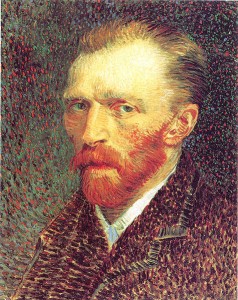
Pathological theory of Genius states that at the basis of geniality are all sorts of abnormalities, a variety of physical and mental health problems that are manifested in eccentric behaviour, nervousness and even mental illness and insanity.
Before the beginning of great brilliance, there must be chaos. Before a brilliant person begins something great, they must look foolish to the crowd.
I Chingn ( Classic of Changes), Chinese ancient divination text (1000–750 BC)
No great genius has ever existed without some touch of madness.
Aristotle (384 – 322 BC), Greek philosopher
There is no great genius without some touch of madness.
Seneca (c. 4 BC – AD 65), Roman Stoic philosopher
It is strange that all great men should have some oddness, some little grain of folly mingled with whatever genius they possess.
Moliere (15 January 1622 – 17 February 1673), French playwright and actor
Oh! how near are genius and madness! Men imprison them and chain them, or raise statues to them.
Denis Diderot (5 October 1713 – 31 July 1784), French philosopher, art critic, and writer Diderot
Genius is sorrow’s child.
John Adams (October 30 1735 – July 4, 1826), American lawyer, author, statesman, and diplomat
I was walking among the fires of Hell, delighted with the enjoyments of Genius; which to Angels look like torment and insanity.”
William Blake (28 November 1757 – 12 August 1827), English poet, painter
Despair and Genius are too oft connected.
George Gordon Byron (22 January 1788 – 19 April 1824), English poet
There is suffering in light; an excess burns. Flames is hostile to the wing. To burn and yet to fly, this is the miracle of genius”
Victor Hugo (26 February 1802 – 22 May 1885), French poet, novelist, and dramatist
Men have called me mad but the question is not yet settled, whether madness is or is not the loftiest intelligence–whether much that is glorious; whether all that is profound–does not spring from disease of thought, from moods of mind exalted at the expense of general intellect.
Edgar Allen Poe (January 19, 1809 – October 7, 1849), American writer, editor, and literary critic
In the republic of mediocrity, genius is dangerous.
Robert Green Ingersoll ( (August 11, 1833 – July 21, 1899), American lawyer and political leader
Genius is one of the many forms of insanity. Cesare Lombroso (6 November 1835 –19 October 1909), Italian criminologist and physician
A man of genius is unbearable, unless he possesses at least two things besides: gratitude and purity.
Friedrich Nietzsche (15 October 1844 – 25 August 1900), German philosopher
Ridicule is the tribute paid to the genius by the mediocrities.
Oscar Wilde (16 October 1854 – 30 November 1900), Irish playwright, novelist, and poet
Genius is a form of the life force that is deeply versed in illness, that both draws creatively from it and creates through it.
Thomas Mann (6 June 1875 – 12 August 1955), German novelist, short story writer
Genius sits in a glass house—but in an unbreakable one—conceiving ideas. After giving birth, it falls into madness. Stretches out its hand through the window toward the first person happening by. The demon’s claw rips, the iron fist grips. Before, you were a model, mocks the ironic voice between serrated teeth, for me, you are raw material to work on. I throw you against the glass wall, so that you remain stuck there, projected and stuck….
Paul Klee (18 December 1879 – 29 June 1940), Swiss-German artist.
There is in every madman a misunderstood genius whose idea, shining in his head, frightened people, and for whom delirium was the only solution to the strangulation that life had prepared for him.
Antonin Artaud (4 September 1896 – 4 March 1948), French dramatist, poet, essayist, actor
There’s a fine line between genius and insanity. I have erased this line.
Oscar Levant (December 27, 1906 – August 14, 1972), American pianist, composer, author and actor
The distance between insanity and genius is measured only by success.
Ian Fleming (28 May 1908 – 12 August 1964), English author, journalist
Madness in method, that’s genius.
Frank Herbert (October 8, 1920 – February 11, 1986), American science fiction writer
Imperfection is beauty, madness is genius and it’s better to be absolutely ridiculous than absolutely boring.
Marilyn Monroe (June 1, 1926 – August 5, 1962), American actress and model
Crazy people who are productive are geniuses. Crazy people who are rich are eccentric. Crazy people who are neither productive nor rich are just plain crazy.
Michael J. Gelb (born 1952), author and public speaker specializing in creativity and innovation
Creation is messy. You want genius, you get madness; two sides of the same coin.
Steve Jobs (February 24, 1955 – October 5, 2011), American information technology entrepreneur and inventor
The distance between insanity and genius is measured only by success.
Bruce Feirstein (born 1956), American screenwriter and humorist
Celebrities about Creativity
Famous celebrities including Coco Chanel, Ralph Lauren, David Letterman, Oprah Winfrey, Heidi Klum, Sienna Miller, and Miranda Kerr share their perspectives on creativity. They emphasize concepts like failure as a step towards success, the importance of innovation and dreaming big, trusting instincts, and the transformative power of attitudes. Creative expressions, they reckon, are essential to personal fulfillment.
Continue Reading November 7, 2013 at 8:29 pm Leave a comment
Insights on Creativity from Famous Directors

FAMOUS FILM DIRECTORS AND ACTORS ABOUT CREATIVITY
Creativity is a drug I cannot live without.
Cecil B. DeMille (August 12, 1881 – January 21, 1959), American film director and producer
A hunch is creativity trying to tell you something.
Frank Capra (May 18, 1897 – September 3, 1991), Sicilian-born American film director
Don’t follow trends, start trends.
Frank Capra
If you can dream it, you can do it. Always remember this whole thing was started by a mouse.
Walt Disney (December 5, 1901 – December 15, 1966), American animator, director and screenwriter
It’s kind of fun to do the impossible.
Walt Disney
You can dream, create, design and build the most wonderful place in the world, but it requires people to make the dream a reality.
Walt Disney
Trust your own instinct. Your mistakes might as well be your own, instead of someone else’s.
Billy Wilder (June 22, 1906 –March 27, 2002), Austrian-born American filmmaker and screenwriter
An audience is never wrong. An individual member of it may be an imbecile, but a thousand imbeciles together in the dark – that is critical genius.
Billy Wilder
To be an artist means never to avert one’s eyes.
Akira Kurosawa (March 23, 1910 – September 6, 1998), Japanese film director, screenwriter, producer
Art lost its basic creative drive the moment it was separated from worship. It severed an umbilical cord and now lives its own sterile life, generating and degenerating itself. In former days the artist remained unknown and his work was to the glory of God.
Ingmar Bergman (July 14, 1918 –July 30, 2007) was a Swedish director, writer and producer
Film has dream, film has music. No form of art goes beyond ordinary consciousness as film does, straight to our emotions, deep into the twilight room of the soul.
Ingmar Bergman
A different language is a different vision of life.
Federico Fellini (January 20, 1920 – October 31, 1993) was an Italian film director and scriptwriter
What is an artist? A provincial who finds himself somewhere between a physical reality and a metaphysical one…. It’s this in-between that I’m calling a province, this frontier country between the tangible world and the intangible one—which is really the realm of the artist.
Federico Fellini
Realism is a bad word. In a sense everything is realistic. I see no line between the imaginary and the real.
Federico Fellini
All art is autobiographical; the pearl is the oyster’s autobiography.
Federico Fellini
A film is – or should be – more like music than like fiction. It should be a progression of moods and feelings. The theme, what’s behind the emotion, the meaning, all that comes later.
Stanley Kubrick (July 26, 1928 – March 7, 1999), American film director and screenwriter
If it can be written, or thought, it can be filmed.
Stanley Kubrick
If you can talk brilliantly about a problem, it can create the consoling illusion that it has been mastered.
Stanley Kubrick
What the hell does it all mean anyhow? Nothing. Zero. Zilch. Nothing comes to anything. And yet, there’s no shortage of idiots to babble. Not me. I have a vision.
Woody Allen (December 1, 1935),American screenwriter and director
If you’re not failing every now and again, it’s a sign you’re not doing anything very innovative.
Woody Allen
You ought to love what you’re doing because, especially in a movie, over time you really will start to hate it.
Francis Ford Coppola (born April 7, 1939), American film director and producer
Art depends on luck and talent.
Francis Ford Coppola
Anything you build on a large scale or with intense passion invites chaos.
Francis Ford Coppola
I realized I probably wouldn’t make another film that cuts through commercial and creative things like ‘Godfather’ or ‘Apocalypse.’
Francis Ford Coppola
Life is very, very complicated, and so films should be allowed to be, too.
David Lynch (born January 20, 1946), American filmmaker and television director
The concept of absurdity is something I’m attracted to.
David Lynch
I dream for a living.
Steven Spielberg (born December 18, 1946), American film director and screenwriter
Only a generation of readers will span a generation of writers.
Steven Spielberg
You have many years ahead of you to create the dreams that we can’t even imagine dreaming. You have done more for the collective unconscious of this planet than you will ever know.
Steven Spielberg
I actually think one of my strengths is my storytelling.
Quentin Tarantino (born March 27, 1963), American film director and screenwriter
I steal from every movie ever made.
Quentin Tarantino
When I’m writing something, I try not to get analytical about it as I’m doing it, as I’m writing it.
Quentin Tarantino
 Creative Vision
You must be logged in to post a comment.