Posts filed under ‘World of Creativity’
Creative vision of the World

Personality Creative Vision of the World is a complex hierarchical system consisting of values and worldview attitudes, emotional position to the world, as well as the creative method, understood as a multi-level techniques and as a tool and means of its transformation.
In the basis of holistic creative vision is a creative interaction with the world. This interaction has a complex, multi-level nature, which reflects the universal structure of all integrative objects. This fundamental, “going-all-the-way-through” structure is reflected in a hierarchical creative attitude of the personality, which includes axiological, cognitive, affective and behavioral components, where the first component is not the highest separated level of the structure, but its basic system-forming factor, the core and centre of organization.
Each of these components manifests itself through the means of the appropriate pairs of opposed, complement mechanisms of creativity:
Table 1. System of complementary mechanisms of Creativity
| Components | Pairs of Mechanisms |
| Axiological | Idealization – Problematization |
| Cognitive | Decentration – Simplification |
| Emotional | Identification – Meditation |
| Behavioral | Self-actualization – Personification |
These components are realized by means of the following social psychological mechanisms of creative activity: idealization, decentration, identification and self – actualization, and each of its mechanisms manifests itself in real creative activity in the form of concrete means, rules and techniques. The essential condition of creative interaction of a personality with an external world is the realization of a unified system of mutually connected mechanisms.
Idealization is understood as vision, seeking and revealing of the ideal nature of object, a mental constructions of its ideal image in which supreme values are harmoniously blended and the vital contradictions are resolved. It is creating and fulfillment of ideal plan and underlying task, generation of daring hypothesis, embodiment of pragmatic and aesthetic ideal, realization of ideal final result.
Problematization is a discovery and point thinning of vital contradictions of the object, a process of problem finding and problem determination. It is perception and search for shortcomings, blanks, discord, asymmetry and imperfections of the object. It is a strive for splitting of the united object, finding opposite features of phenomena, vision its dark sides and “shadows”.
Decentrationmanifests itself as a process of creation different approaches toward an object, changing one’s mind and taking into account various points of view. This mechanism represents the process of mental replacement of habitual connections by different unusual ones, deviation from traditional patterns of thinking, destruction of traditional notions, mental inertia and stereotypes overcoming. It is the process of generating various unconventional ideas and unusual images.
Simplification is understood as getting rid of all complicated, inconsequential, tangled, insignificant and confusing, as achievement of clarity and elegance of the form and at the same time depth and accuracy of the contents. It is ability to concentrate upon the essence of an object, express its complexity by means of simple and clear notions. It is the capacity to choose the best combination, based on criteria of hidden order, harmony and beauty.
Identification is realized by means of active immersion and embodiment in objects and their circumstances, blending with them and experiencing emotional resonance. By means of this mechanism, the personality is absorbed in the object of material and non-material nature, it is transformed into them and gets to know their internal impulses, circumstances and logic of development.
Meditation is alienation and feelings of isolation from the external and inner world, maintaining necessary distance from the object of interaction, impassive and fresh perception of its nature, real relationships, its harmony, beauty and symmetry. It is a vision of the world and oneself in a new way through defamilirization or making familiar things and phenomena strange.
Self-actualization is understood as a process of the most complete revelation and development of one’s personal potentials, as a productive and integrated self-realization of creative possibilities.
Mechanism of self-actualization reflects not only free and subject’s spontaneous self-expression, but its internal activity, ability to make efforts, aimed at the self-mobilization, and highest possible realization of one’s own creative potential.
Integrated self-fulfilment involves the realization of ideal designs, plans and models, spontaneous self-expression, self-unfolding, self-determination and self-assertion.
Personification is an animation and inspiration of the objects, endowing them with human properties, subject’s characteristics and recognition of their independence and their right to self determination and self-development. It is letting objects go, getting them right on free activity, and letting them take their own direction. Besides this mechanism manifests itself as creation of a self-generating and self-developing structures which independently move to an ideal goal, making a unified well-balanced system, capable of an independent search and productive reconciliation of its contradictions.
Major stages, mechanisms and techniques of Creative Vision
Creative interaction with the world is rich not only in content, but also in temporal structure, which includes series of consecutive stages: perception and emotional experience of objects, their analysis, comprehension and operating them.
- Creative Perception of reality starts with releasing from the traditional systems and notions, stereotypes returning to the primordial ignorance, to “nothing”, to origin and source of the world aloofness from the world is naturally replaced by insight, ecstasy a surprise at the riches and beauty the world.
The complete renunciation from one’s “Self” with its distortive internal impulses and the load of acquired knowledge gives rise to the new world, in all its cleanliness freshness and beauty.
2.Creative consciousness independently reduces the threshold of sensation, increases their intensity concentrates attention on each of them, simultaneously synthesizing them into a bright unified image. Activity of the perception reveals itself in consideration the object from different angles, it allows to notice something new, mysterious, handsome, subtlety and details, predict their future and the ideal essence.
3.Creative Emotional experience.The creative perception of reality is full of emotional experience and enjoyment of the colors, sounds and shapes of an object. As a special kind of trans-personal experience we define blending, unification with an object of perception, up to complete immersion into its space, time and essence.
Hence, the complete saturated of the peak experiencing, “assimilation” with another object, is naturally followed by the cognitive removal, impassive contemplation of its structure, harmony and beauty.
While the creative perception starts with the getting rid of the stereotypes and fixations, the creative analysis of the reality is caused by doubts releasing from the captivity of the common since, denial of traditional theoretical concepts.
4.Creative Thinking consists of abilities to penetrate into the essence of the object, to separate the signs and single out strong opposite and also masked but useful ones. At the same time, it reveals itself in free transition to its over – and undersystems, to understanding causes and consequences of their activities, unfolding of temporal structures de-termination of trajectory of their development.
Volumetric and polyphonic vision of the objects is maintained by means of creation of different approaches to their exploration application of various points of view of professionals, dilettantes, geniuses, children, living and inanimate natural objects.
Creative analysis also implies the revelation of all contradicting systems, allocation and intensification of the main, vital elements, that determine the line of development.
5.Creative Comprehension of the objects and phenomena of reality consists of the prediction and anticipation of their future conditions, mental creation of ideal properties and circumstances. It also includes resacralization of the objects, acceptance of its universal value, understanding it as a necessary link in the Universal chain of events, embodiment of the clots of human spirit, labor and emotions in it reflecting essence of Absolute.
6.Creative Manipulations. Creative interaction with the world consists not only of perception and recognition of its ideal essence and submission to its main lows, but also of spontaneous, expressive self-revelation striving to play with the essence and forms of the world a wish to break usual connections to over come causality and time and of experience its pliability and plasticity.
Creative attitude towards the world always includes some elements of the game, risk and humor acquisition of fantastic power ability to manipulate its objects ideals and laws. Creative personality consciously brings an intrigue mystery and paradox into its attitude towards the world fills it with problems, intensifies conflicts, endows the objects with the subject’s attributes and determines the rules of the game. It revives inanimate objects reinforces and strengthens their essence fills them with the signs and properties of the ideal, set them in paradoxical situations, splits them into numerous constituents, creating new and useful combinations and patterns out of them.
In this case, the desire for creative manipulation of the objects of the world is based on the realization that the reality is already implicitly contains in itself its own future, that everything in nature exists only in an extremely enlarged or reduced, expanded or collapsed over time, that all is connected to everything and just the natural evolution or deliberate experimentation with reality can arouse and build new relationships, substance and form.
The complexity, multilateral and informative riches of personality’s interaction with the world is compressed, summarized and lined up by means of a special method, represented in an unfolding algorithm that includes a series of consecutive operations and directed intellectual efforts.
Method of Creative Dialogue Personality with the World
1. Creative Perception
1. Purification.
Return to the beginning. Stop the time, tear all existing connections, return to the originality primordial ignorance, to “Nothing”, emptiness and silence of the world.
2. Bright, clear and keen perception of the surrounding object’s signs.
2.1. Sounds.
a) Percept solely sounds, absorb them and dissolve into them.
b) Single out each separate sound in turn, and be able to increase its intensity.
c) Apprehend new, unknown noises, and space vibrations.
2.2. Colours.
a) Percept solely colours. b) Single out each colours and be able to increase its intensity. c) See the luminescence and the twinkling of the Space colours.
2.3. Smells (a,b,c).
2.4. Tastes (a,b,c).
2.5. Touch sensation (a,b,c).
2.6. Configurations (a,b,c).
2.7. Motion of the object (a,b,c).
2.8. Percept all object signs together. a) Synthesize all sensations, and create a unified, polyphonic image. b) Break the borderline between oneself and the world, be opened to its rhythms, feel oneself the inseparable part of it.
2.9. Surprise and ecstasy. Discover the world in a new, give it a new and fresh look, and see things around you as they are.
3. Isolation and perception of the separate qualities of the object.
3.1. See solely new qualities.
3.2. See the beauty and harmony.
3.3. Find a mystery and enigma.
3.4. Notice the subtlety, details and nuances.
4. Spatial decentration.
4.1. See the object: a) from above b) from below c) from the inside.
4.2. Percept object from the position of: a) an small insect, b) a huge mountain. c) any other object and subject
Percept object : a) as an insect-small, b) as a mountain-big compared to object.
5. Temporal decentration.
a) See the object in the its past and in the future
b) see germs of the future and traces of the past in the object.
6. The expansion of Vision
a) See the objects located in the room all together, b) See simultaneously all the events happen in the house at the moment, c)…in the town, d)…in the your country, e)…on the Earth, f)…in the Universe.
b) See the history of the object, its origin, Culmination and completion on the “unfolded time screen”.
2. Creative Emotional Experience
1. Enjoying the play of colours, sounds and shapes, the delight of the world’s beauty and harmony.
2. Emotional decentration. Emotional attitude towards the object: a) Love, b) Hatred, c) Indifference, d) Irony, e) “Sub specie aeternitatis”
3. Identification with the object, immersion and assimilation with it, and intuitive comprehension of its unique essence.
4. Cognitive self-division from the object, holistic, simultaneous perception of object’s connections, harmony and symmetry.
5. Enjoyment of the play with the object: manipulation of its qualities and perception of its unexpected manifestations.
6. Transpersonal, peak experience of its original and exceptional value.
3. Creative Analysis
1. Doubt the existing conceptions, be free from imposed settlement of the common sense.
2. Determine the nature of the object.
2.1.What’s its main function?
2.2. What are its main needs and goals?
2.3.What does it produce?
2.4. Simplify the object in the imagination, put aside everything secondary, and unimportant. a) Express its essence in one word, b) By symbol, c) By a metaphor ( including that containing paradox ) d) In a formula, e) On a diagram.
3. Split the object into its constituents, define
a) substantial, b) opposite, c) weak but useful
4. Comprehend the whole complex of connections and relations with other objects.
5. Define the structure of the object.
5.1.Distinguish between the structural levels. a) What is the over-system and its goal, b) What are the under-systems and their goals (determine how the system transforms the matter, energy and information).
c) What is the anti-system and its goal.
5.2.Define the temporal structure. a) Imagine the object in the past and in the future, b) Define the line of the development: the beginning, the peak and the end. See the point where the object is located at the present moment .
6. Semantic decentration.
6.1. Apprehend how the object is treated in different sciences: philosophy, economics, psychology, physics, mathematics, etc.
6.2.Unified, polyphonic vision of the object, creation and application of different points of view of: a) A genius, b) A professional,
c) A laymen, d) A child e) An animal f) An inanimate object.
6.3.Place the object in different imaginative paradoxical, fantastic situations.
6.4 Semantic “rotation” of the object by means of different lists of test questions.
7. Determine the main contradictions within the object between:
a) Ideal and reality,
b) Aims of system, over system and under system,
c) The present, the past, the future,
d) Recourses and their use,
e) Opposite signs.
4. Creative Comprehension
1. The vision of the ideal nature of the object, mental creation of its ideal image and conditions of its realization.
2. Resacralization of the object, admission of its undoubtful value.
3. Treating the object as a necessary link in the history and the reflection of the Absolute.
4. Blending in and assimilation with the Absolute, acquisition of the unified, cosmic consciousness, cosmic consciousness, reception of the energy and information streams from the superior worlds.
5. Creative Manipulation And Handling
1. Free, profound and sincere self-expression and affirmation of one’s own genuine
nature, enjoyment of liberty, ability to create, overcome of causality and time, reinforce the essence of objects and forthcoming them closer to the ideal. Dizzy realization that “Everything is possible” and “Everything is achievable”.
2. Free handling with the object.
Table 2. Major Techniques of Creative Vision
| Space | Time | Content |
| Idealization | ||
| 1. Insert parts of the space into each other like a set of nesting dolls. 2. Go to the super-system. 3. Used the superior higher dimension | 1. See the process as the temporal integrity: the beginning, the culmination and the end. 2. Start from the endpoint. Techniques: a). Preliminary actions. b).”Pre-planted pillows”. | 1. Imagine that everything has been achieved, and all contradictions resolved. 2. Start from the endpoint. 3.Give the object the ability to independently resolve contradictions and problems, and imagine that everything comes true by itself like in a fairy tale. Techniques: a). Creation of the perfect plan; b). “Universal Action” – object performs the functions of any other object and can be whatever you like. |
| Problematization | ||
| 1. Giving asymmetry to the structure of the object 2. Restructuring: a whole – performs one function part – opposite. | 1. Swinging open of opposites in time: the principle of periodic action. | 1.Increase and sharpening of differences. 2.Creating a collision between two harmful factors. 3.The principle of paradox, of the “explosion”, is an incident and catharsis |
| Decentration | ||
| 1. Change the dimension of the object. 2. Turn the object incide. 3. Resize the object and its parts from 0 to ∞. | 1. Watch the object from the future and the past. 2. Turn the time back. 3. Change time of the events from time 0 to ∞. 4. The principle of “breakthrough”. | 1. Put an object in the most unexpected situations. 2. Using the transition states. 3. The principle of partial or excessive action. 4. Implement the opposite effect and anti-function. 5. Change the price and basic function from 0 to ∞. Techniques: a). do the opposite b). turn harm in favour, c). increase a harmful factor and use the energy of injury d). compensate a one harmful factor by others. |
| Simplification | ||
| 1. Getting rid of needless parts. 2. The “carrying out” principle. 3. Mediator’s principal – manipulation with a copy of the object. | 1. The principle of “substitution expensive longevity on the cheap short-lived sequence”. | 1. Deliverance from internal and external constraints. 2. Getting rid of the false assumptions and redundant information. 3. Getting rid of the usual terminology, the creation of neologisms. |
| Identification | ||
| 1. Take up the position of the object in space and to see other objects from its point of view. 2. Adopt the shape and dimension of the object. | 1. Feel the object rhythm and natural frequency, enter into resonance with him. | 1. Get used to object, re-embody object. 2. Using the principles of uniformity, synchronization and resonance. Techniques: a). personal analogy b). “Method of Little Men” – imagine oneself like the team of little men who become a parts of the object. |
| Meditation | ||
| 1. Removal from object in space. | 1. Keep at a distance from the past and future. | 1. Anaxiomatization – a temporary aloofness from the problem, devaluation of problem and conventional ways and methods of it’s solving. Solving the problem by means of their elimination, through complete rejection of them. Solving the problem by it’s elimination, by avoiding and ignoring. 2. Cognitive exclusion and alienation from the subjective “Ego” also from the object and the relationship with him. |
| Self-actualization | ||
| 1. Unfold the object into the separate parts and shuffle its: a). among themselves; b). with parts of other objects. 2. Turn form a single object in the form of another. | 1. Increase and sharpening of differences. 2. Creating a collision between two harmful factors. 3. The principle of paradox, of the “explosion”, is an incident and catharsis | 1. Single out the object attributes, properties, functions and shuffle its: a). among themselves; b). with the properties and functions of other objects. 2. Transform the qualities of one object into another one, to see the transition point. 3. Endow the object with senses of other objects. |
| Personification | ||
| 1. The minimizing of Intervention principle. 2.Principle of Non-interference. | 1 Principle of Dynamization: make immovable objects or its separate parts – mobile. | 1.The principle of “wu-wei” (non-action). Eliminate the idle actions. 2. Creating such kind of a structure, which itself resolves emergent contradictions. 3. Implementation of the principles of self-service, self-correcting and independent use of resources. |
The method described above can serve as a form of creative self-training or meditation where the sequence the value and the velocity of the stages can be changed depending on conditions and qualitative kinds of involved into interaction. Using mechanisms of immersion, coagulation and automation it appropriated by the personality, consolidated and turned into a steady personal structure the creative position of the personality.
At the same time this method is the way of unified creative vision of the reality and serves as a basis for the definition and revelation of vital contradictions of the object and presents the possibility to create different methods of solving specific life problems.
1. Markov, S.L. (2011) Formuvannia tvorchogo bachennia osobystosti jak universalnyi metod aktivizacii tvorchosti [Formation of creative vision of an individual as the universal method of enhancing creativity]. In S.D. Maksimenko & L.M. Karamushka (Eds.), Actualni problemy psichologii. Vol 1. (pp. 374-380). Kyiv: Publishing House “A.C.K”.
Charlize Theron -Short Biography and Best Pictures

CHARLIZE THERON
(August 7, 1975, Benoni, South Africa)
Nationality: South Africa, United States
Category: Celebrities
Occupation: Actress, Producer, director, model
Specification: First African to win an Oscar for Best Actress (Monster, 2003)
Genres: Drama, Crime, Thriller
Gender: Female
Height: 5′ 9½” (1.77 m)
Weight: 135 lbs (61.2 kg)
Measurements: 36B-24-36 (US); 91,4-61-91 сm (EU).
Her father is of French descent and her mother of German descent
French Ancestry Paternal side German Ancestry Maternal side
She became an American citizen in 2007.
Los Angeles and Malibu,, California
Domestic partner: Stuart Townsend (2001 – 2010)
Son: Jackson Theron (b.November 2011) adopted in March 2012
Her first language is Afrikaans, she has a green eyes and Danced professionally.
Has her own charity called the Charlize Theron Africa Outreach Project She is involved in women’s rights organizations and is a supporter of animal rights
Aword: On September 30, 2005, Theron received her own star on the Hollywood Walk of Fame
Won Oscar. Another 30 wins & 32 nominations
She won the Academy Award for Best Actress and Golden Globe Award for Best Actress – Motion Picture Drama for her portrayal of serial killer in Monster (2003)





Pathological theory of Genius. Quotes and aphorisms.
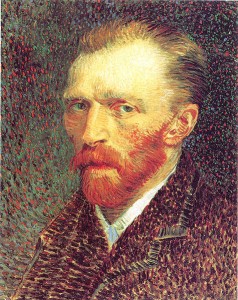
Pathological theory of Genius states that at the basis of geniality are all sorts of abnormalities, a variety of physical and mental health problems that are manifested in eccentric behaviour, nervousness and even mental illness and insanity.
Before the beginning of great brilliance, there must be chaos. Before a brilliant person begins something great, they must look foolish to the crowd.
I Chingn ( Classic of Changes), Chinese ancient divination text (1000–750 BC)
No great genius has ever existed without some touch of madness.
Aristotle (384 – 322 BC), Greek philosopher
There is no great genius without some touch of madness.
Seneca (c. 4 BC – AD 65), Roman Stoic philosopher
It is strange that all great men should have some oddness, some little grain of folly mingled with whatever genius they possess.
Moliere (15 January 1622 – 17 February 1673), French playwright and actor
Oh! how near are genius and madness! Men imprison them and chain them, or raise statues to them.
Denis Diderot (5 October 1713 – 31 July 1784), French philosopher, art critic, and writer Diderot
Genius is sorrow’s child.
John Adams (October 30 1735 – July 4, 1826), American lawyer, author, statesman, and diplomat
I was walking among the fires of Hell, delighted with the enjoyments of Genius; which to Angels look like torment and insanity.”
William Blake (28 November 1757 – 12 August 1827), English poet, painter
Despair and Genius are too oft connected.
George Gordon Byron (22 January 1788 – 19 April 1824), English poet
There is suffering in light; an excess burns. Flames is hostile to the wing. To burn and yet to fly, this is the miracle of genius”
Victor Hugo (26 February 1802 – 22 May 1885), French poet, novelist, and dramatist
Men have called me mad but the question is not yet settled, whether madness is or is not the loftiest intelligence–whether much that is glorious; whether all that is profound–does not spring from disease of thought, from moods of mind exalted at the expense of general intellect.
Edgar Allen Poe (January 19, 1809 – October 7, 1849), American writer, editor, and literary critic
In the republic of mediocrity, genius is dangerous.
Robert Green Ingersoll ( (August 11, 1833 – July 21, 1899), American lawyer and political leader
Genius is one of the many forms of insanity. Cesare Lombroso (6 November 1835 –19 October 1909), Italian criminologist and physician
A man of genius is unbearable, unless he possesses at least two things besides: gratitude and purity.
Friedrich Nietzsche (15 October 1844 – 25 August 1900), German philosopher
Ridicule is the tribute paid to the genius by the mediocrities.
Oscar Wilde (16 October 1854 – 30 November 1900), Irish playwright, novelist, and poet
Genius is a form of the life force that is deeply versed in illness, that both draws creatively from it and creates through it.
Thomas Mann (6 June 1875 – 12 August 1955), German novelist, short story writer
Genius sits in a glass house—but in an unbreakable one—conceiving ideas. After giving birth, it falls into madness. Stretches out its hand through the window toward the first person happening by. The demon’s claw rips, the iron fist grips. Before, you were a model, mocks the ironic voice between serrated teeth, for me, you are raw material to work on. I throw you against the glass wall, so that you remain stuck there, projected and stuck….
Paul Klee (18 December 1879 – 29 June 1940), Swiss-German artist.
There is in every madman a misunderstood genius whose idea, shining in his head, frightened people, and for whom delirium was the only solution to the strangulation that life had prepared for him.
Antonin Artaud (4 September 1896 – 4 March 1948), French dramatist, poet, essayist, actor
There’s a fine line between genius and insanity. I have erased this line.
Oscar Levant (December 27, 1906 – August 14, 1972), American pianist, composer, author and actor
The distance between insanity and genius is measured only by success.
Ian Fleming (28 May 1908 – 12 August 1964), English author, journalist
Madness in method, that’s genius.
Frank Herbert (October 8, 1920 – February 11, 1986), American science fiction writer
Imperfection is beauty, madness is genius and it’s better to be absolutely ridiculous than absolutely boring.
Marilyn Monroe (June 1, 1926 – August 5, 1962), American actress and model
Crazy people who are productive are geniuses. Crazy people who are rich are eccentric. Crazy people who are neither productive nor rich are just plain crazy.
Michael J. Gelb (born 1952), author and public speaker specializing in creativity and innovation
Creation is messy. You want genius, you get madness; two sides of the same coin.
Steve Jobs (February 24, 1955 – October 5, 2011), American information technology entrepreneur and inventor
The distance between insanity and genius is measured only by success.
Bruce Feirstein (born 1956), American screenwriter and humorist
Robert De Niro-Short Biography and the Best Pictures
 ROBERT DE NIRO
Robert Anthony De Niro Jr.
(17 August 1943, New York, New York)
Nationality: United States, Italy
Category: Celebrities
Occupation: Actor, director, producer
Specification: iconic American film actor, two-time Academy Award-winning
Major Genres: drama, comedy, crime
Gender: Male
Height: 5′ 9½” (1.77 m)
Spouse: Grace Hightower (m. 1997), he has 6 children. (daughter Helen Grace Hightower De Niro, b. 23 Dec. 2011)
Home town: Manhattan, New York
Founder of the Tribeca Film Festival
First Major Screen Credit: Greetings (1968)
Career Highlights: Brazil (1985), Raging Bull (1980), Goodfellas (1990)
Academy Awards: for Best Supporting Actor (1974) for The Godfather Part II, for Best Actor (1981) for Raging Bull
Nominated: Best Actor, Taxi Driver (1976); The Deer Hunter (1978); Awakenings (1990); Cape Fear (1991).
Golden Globe Award for Best Actor: New York, New York (1977), Midnight Run (1988), Analyze This (1999) and Meet the Parents (2000, with Ben Stiller).
Other Major works:
Directed: A Bronx Tale (1993) and The Good Shepherd (2006, starred Matt Damon and Angelina Jolie).


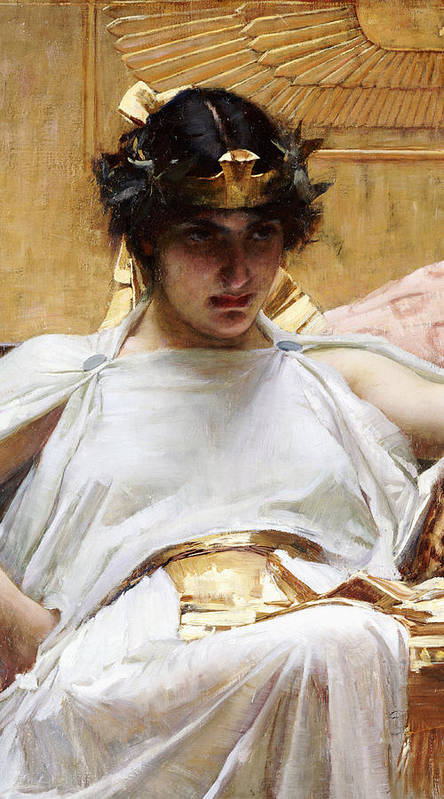
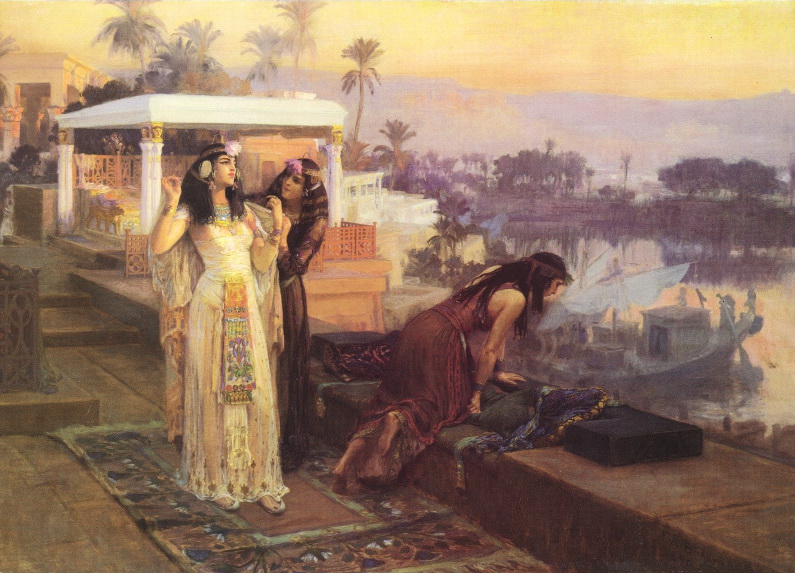
Cleopatra: Iconic Female Ruler’s Representation in Art
 CLEOPATRA
Cleopatra VII Thea Philopator
(69 BC – August 12, 30 BC) (aged 39)
Nationality: Ancient Egypt
Category: Figures
Occupation: Ruler
Specification: The most ever famous queens of all times in ancient Egypt, the first ruler of the dynasty to learn Egyptian, the last Pharoah of Egypt.
Gender: Female
Reign: 51 BC–12 August 30 BC
Co-rulers: Ptolemy XIII (51 BC–47 BC)
Ptolemy XIV (47 BC–44 BC)
Caesarion (44 BC–30 BC)
Vivien Leigh as Cleopatra in the film “Caesar and Cleopatra” (1945).



Gustav Fechner – Founder of psychophysics
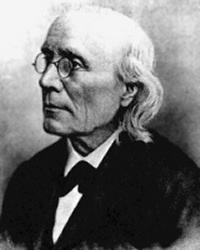
Gustav Theodor Fechner
(April 19, 1801, Groß Särchen, near Muskau, Lower Lusatia, (now Żarki Wielkie in commune Trzebiel, Poland) – November 28, 1887, Leipzig, Germany) (aged 86)
Nationality: Germany
Category: Scientists
Occupation: Psychologist, philosopher, physicist and writer.
Specification: Founder of psychophysics, one of the founders of modern experimental psychology
Gender: Male
Gustav Fechner Quotes:
1. Those only have had great influence in the world who have recognized the spiritual tendency of the time in which they lived and have directed their free action and thought into that tendency.
2. Man lives on earth not once, but three times: the first stage of his life is his continual sleep; the second, sleeping and waking by turns; the third, waking forever.
3. A Goethe, a Schiller, a Napoleon, a Luther, still live among us, thinking and acting in us, as awakened creative individuals…
4. The mind of man is alike indistinguishably his own possession and that of the higher intelligences, and what proceeds from it belongs equally to both always, but in different ways.
5. Have the best constantly in mind, and be careful only that the memory that you yourself are to leave behind shall be a blessing to you in the future.
Jesus Christ Spiritual Quotes

JESUS CHRIST
Jesus of Nazareth, Yeshua Ha-Nozri, Jesus is the Messiah, Christo (Greek), Christ (English)
(c. 6-4 BC, Bethlehem Nazareth, Judea – 7 April 30 AD, Jerusalem, Calvary or Golgotha Judea, Roman Empire) (crucifixion).
Nationality: Ancient Rome
Category: Votaries of Spirit
Occupation: Spiritual teacher
Specification: Founder of Christianity, The Son of God and God incarnate in the Christian religion
Gender: Male
Holiday: Birthday Is Holiday 25 December ( 7 January), Christmas
Jesus Christ Quotes:
1. A new command I give you: Love one another. As I have loved you, so you must love one another.
2. Ask and it will be given to you; seek and you will find; knock and the door will be opened to you.
3. You shall love the Lord your God with all your heart and with all your soul and with all your mind. This is the great and first commandment. And a second is like it: You shall love your neighbour as yourself.
4. Ye shall know the truth, and the truth shall make you free.
5. I am the Way, the Truth, and the Life.
6. Let me into your lives, your world. Live on me, so that you may become truly alive.
7. Do not be anxious about tomorrow, for tomorrow will be anxious for itself. Let the day’s own trouble be sufficient for the day.
8. For what shall it profit a man, if he gain the whole world, and suffer the loss of his soul?
9. Not everyone who says to Me, ‘Lord, Lord,’ shall enter the kingdom of heaven, but he who does the will of My Father in heaven.
10. But many that are first shall be last; and the last shall be first.
11. If you want to be perfect, go, sell your possessions and give to the poor, and you will have treasure in heaven.
12. If ye have faith as a grain of mustard seed, ye shall say unto this mountain, Remove hence to yonder place; and it shall remove; and nothing shall be impossible unto you.
13. Suffer little children, and forbid them not, to come unto me: for of such is the kingdom of heaven.
14. With men this is impossible, but with God all things are possible.
15. Judge not, that ye be not judged.
16. Repent: for the kingdom of heaven is at hand.
17. Arise, and be not afraid.
18. Enter by the narrow gate; for wide is the gate and broad is the way that leads to destruction, and there are many who go in by it. Because narrow is the gate and difficult is the way which leads to life, and there are few who find it.
Celebrities about Creativity
Famous celebrities including Coco Chanel, Ralph Lauren, David Letterman, Oprah Winfrey, Heidi Klum, Sienna Miller, and Miranda Kerr share their perspectives on creativity. They emphasize concepts like failure as a step towards success, the importance of innovation and dreaming big, trusting instincts, and the transformative power of attitudes. Creative expressions, they reckon, are essential to personal fulfillment.
Continue Reading November 7, 2013 at 8:29 pm Leave a comment
Frank Barron – Psychology of Creativity

FRANK BARRON
Frank Xavier Barron
(June 17, 1922, Lansford, Pennsylvania – October 6, 2002, Santa Cruz, California) (Aged 80)
Nationality: United States
Category: Scientists
Occupation: Psychologist, Professor, Non-Fiction Writer, Poet
Specification: A pioneer in the psychology of creativity and in the study of human personality, professor of Psychology at the University of California Santa Cruz. Psychology of Creativity
Gender: Male
Family: Barron married Nancy Jean Camp in 1961, and they had three children: Francis Charles Xavier, Brigid Jessica Sarah, and Anthea Rose Maeve.
Education: In 1937 he attended La Salle University, from which he graduated with a Bachelor of Arts in 1942. He received his Master of Arts from the University of Minnesota in 1948, and his Ph.D. from the University of California at Berkeley in 1950.
Influences: Dante, Augustine, Yeats, Galton,Pavlov, Fechner, W. James, Freud, Jung, Bergson, Teilhard de Chardin, Binet and Piaget.
Career: Barron served the U.S. Army (1943 – 1946) in Europe as a medical sergeant. He taught as a visiting professor at Harvard, Bryn Mawr College, University of Hawaii, Wesleyan and from 1949 to 1968 worked as a founding member of the Institute of Personality Assessment and Research (IPAR) at UC Berkeley. From 1969 until his retirement in 1992 he taught courses in personality and human creativityat the University of California, Santa Cruz.
Personality: Barron had a gentle heart, great sense of humor and impressed with his erudition , subtlety of mind and love of language. He was fond of poetry and wrote a book of poems “Ghosts”.
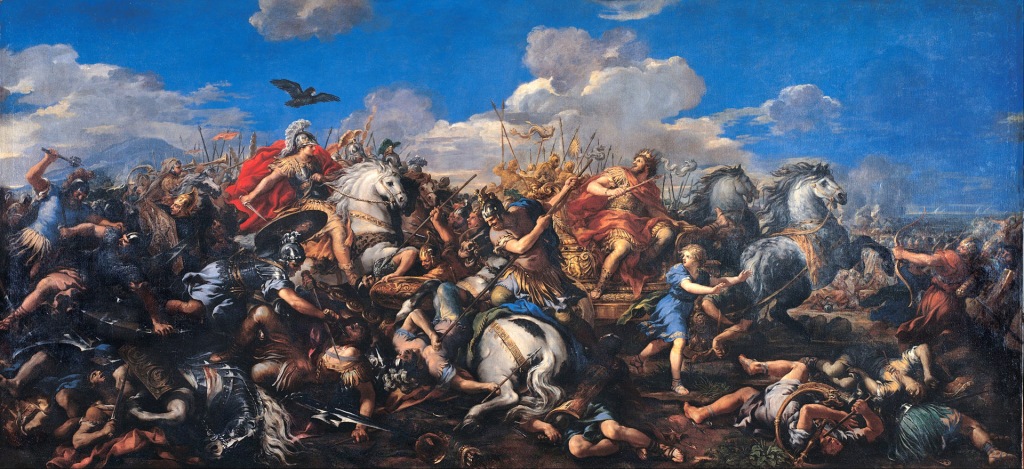
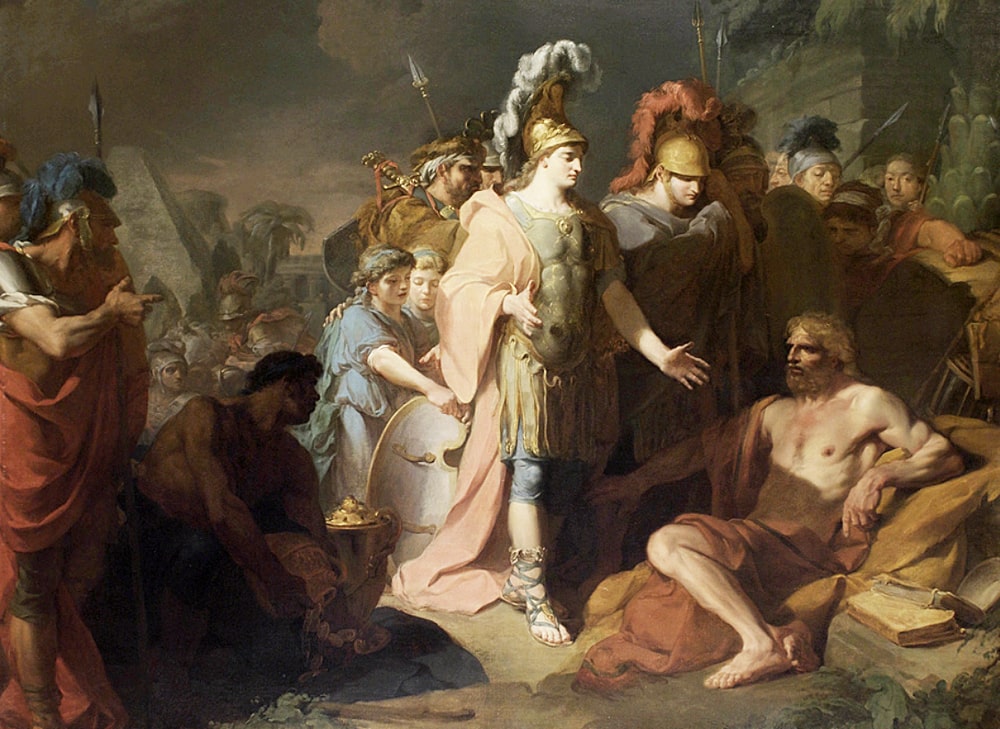
Alexander the Great in Art
 ALEXANDER THE GREAT
Alexander III of Macedon
Alexandros Philippou Makedonon
(20/21 July 356 BC, Pella, Macedonia — June 10/13, 323 BC, Babylon) (aged 33)
Nationality: Ancient Greece, Macedonia
Category: Figures
Occupation: Military Leader, ruler, world conqueror
Specification: King of Macedonia, Emperor who created one of the largest empires in ancient history, one of the most successful military leaders in history
Gender: Male
Reign: 336–323 BC
Titles: Hegemon of the Hellenic League, Shahanshah of Persia, Pharaoh of Egypt and King of Asia
Alexander the Great quotes: 1. There is nothing impossible to him who will try. 2. I am indebted to my father for living, but to my teacher for living well.
R




 Creative Vision
You must be logged in to post a comment.