Posts tagged ‘realism’
Steve Hanks: A Master of Figurative Watercolors

Steve Hanks
February 26, 1949, in San Diego, California – April 22, 2015, in Albuquerque, New Mexico) (age of 66).
Nationality: American
Occupation: Watercolor Painter and Artist
Influenced by: The Pacific Ocean, surfing, and the music of the 1960s, particularly by the music of Bob Dylan, which he often listened to while painting.
Movements: Figurative Realism
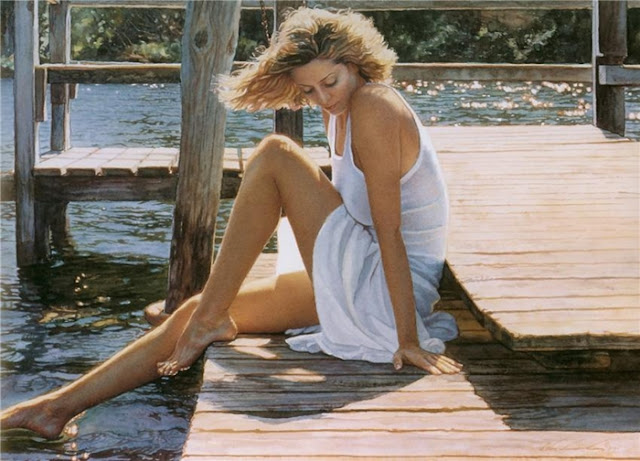
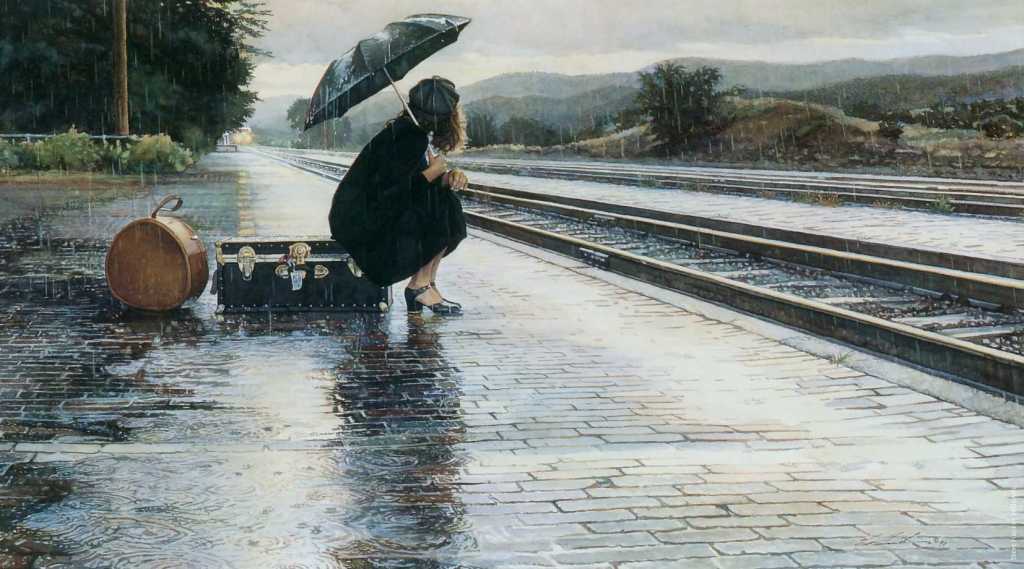
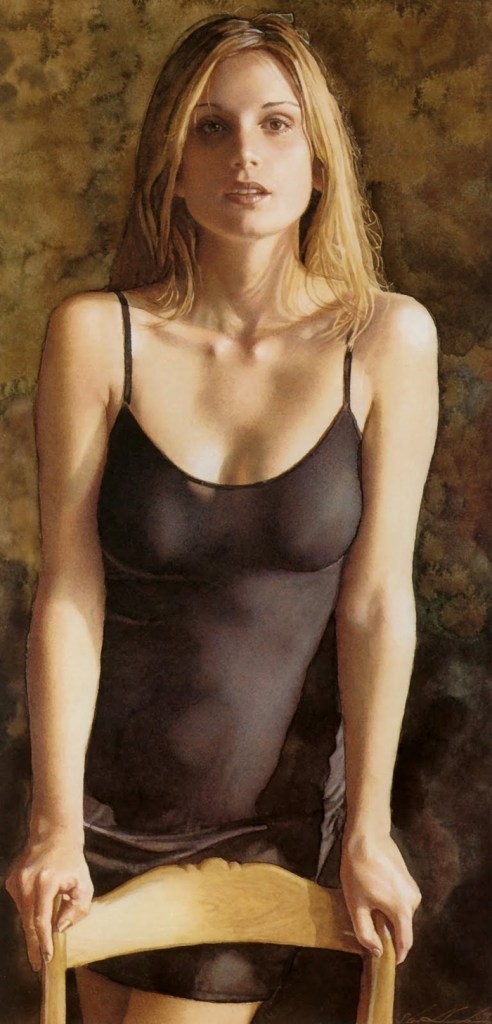
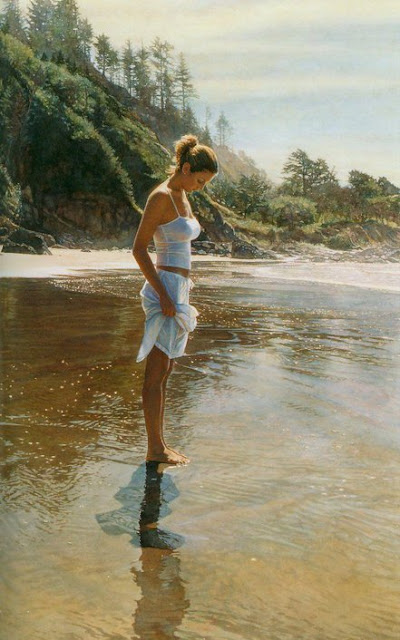
Styles: Emotional Realism, characterized by detailed and realistic depictions of light and shadow. Backlighting is also a signature element of his style. He often leaves the faces of his figures obscured or turned away, not only to leave the face to the imagination of the viewer but also to allow the entire figure to express the emotion. Each of his paintings contains a mystery, and reveals the emotions and stories of the artist who created them. His paintings were highly detailed and realistic.
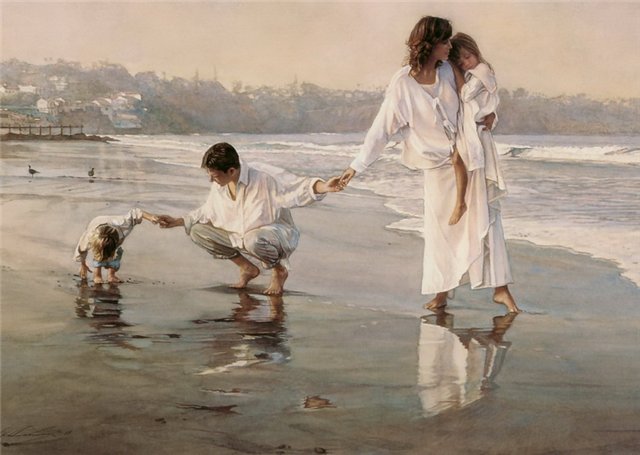
Subjects: Hanks’ subjects were mostly domestic scenes. Women and children, often in intimate and introspective settings. He loves to paint sunlight and according to him sometimes his work is more about sunlight than anything else.
Genres: Watercolor Painting
Mediums: Watercolor, oils, pencil, acrylics, and Etch A Sketch.
Unique Distinction: Steve Hanks is recognized as one of the best watercolor artists of his time.Known for his exceptional mastery of watercolor painting, achieving a level of realism and detail that is rare in the medium.

Achievements and Main Contribution to Art: Consistently recognized as one of the top ten American artists by U.S. Art Magazine, received the National Watercolor Society Merit Award, the National Academy of Western Art Gold Medal, and was inducted into the U.S. Art Hall of Fame. Hanks had a significant impact on the art world, particularly in the field of watercolor painting. Hanks’ impact on the art world was also evident in his role as a mentor and teacher, sharing his expertise and techniques with other artists.
Quotes
“The ocean made a strong and lasting impression on me. It was good for the soul to be out in the water — surfing, swimming, or simply getting in touch with its mysterious power.”
“I’ve tried to be responsible and put positive images out into the world.” “I hope that my work brings comfort, pleasure and insight into people’s lives.”
“Sunlight has become one of my favorite subjects. I’m fascinated by how it filters through things, how it floods a whole room with color. Often my paintings are really more about sunlight than anything else.”
Family Background and Early Life Experiences: Born into a military family, Hanks grew up playing tennis and surfing along the beaches of Southern California. He says that it’s good for the soul to be out in the water surfing, swimming and playing.
His father was a highly decorated WWII Navy flyer. The family moved to New Mexico when Hanks was a junior, and he attended high school there. He developed an allergy to oils, which led him to experiment with watercolors.
Education Background: Attended the Academy of Fine Arts in San Francisco, earning excellent marks in commercial art and figure drawing. He then transferred to the California College of Arts and Crafts, graduating with a Bachelor of Fine Arts degree.
Professional Work Experience:
• Worked as a caretaker at a Campfire Girl’s camp in New Mexico, where he spent four and a half years experimenting with various mediums, including oils, watercolor, pencil, and acrylics.
• Consistently appeared in the list of top ten American artists compiled by U.S. Art Magazine since 1993.
• Received the National Watercolor Society Merit Award and the National Academy of Western Art Gold Medal.
• Featured Artist at the 7th Annual Andre Agassi Grand Slam for Children in 2002.
• One of the top 25 selling artists in the June 2002 issue of Decor magazine.
Personal Life: Married to Laura, with whom he had three daughters. His marriage to Laura and the arrival of three children provided new inspiration for the artist. His family often appeared in his work, and he sought to capture intimate moments of their lives. Many lovingly rendered domestic scenes were added to the portfolio during those years. His work focused on capturing intimate moments he called “moments of introspective solitude.”
Personality Traits, Hobbies, and Interests: He was known for being a responsible artist who put positive images out into the world.
Hanks believed that art came from a deep inner sense of direction and was deeply affected by the emotions and music of the 1960s. Park West Gallery remembering Steve Hanks, wrote that thanks to his creativity, the multi-talented artist was even more recognized than his relative, actor Tom Hanks.




Peder Mørk Mønsted – Danish realist painter

Peder Mørk Mønsted
(10 December 1859, Grenå, Denmark – 20 June 1941, Fredensborg, Denmark)
Nationality: Danish
Category: Art workers
Occupation: Painter
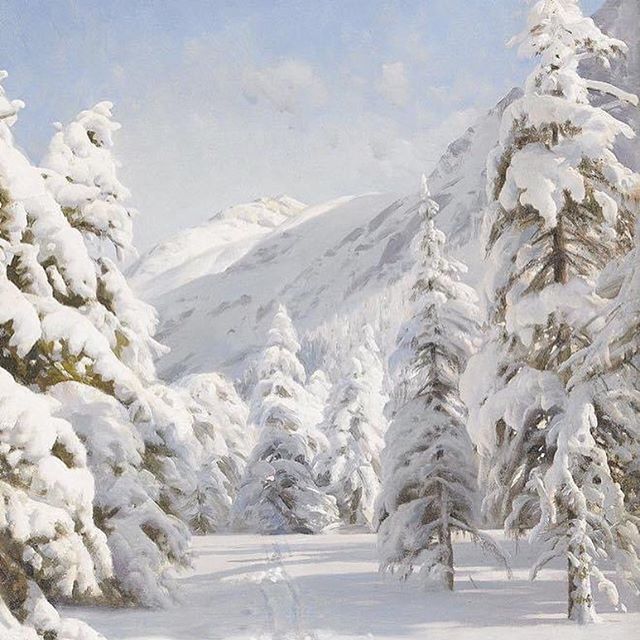
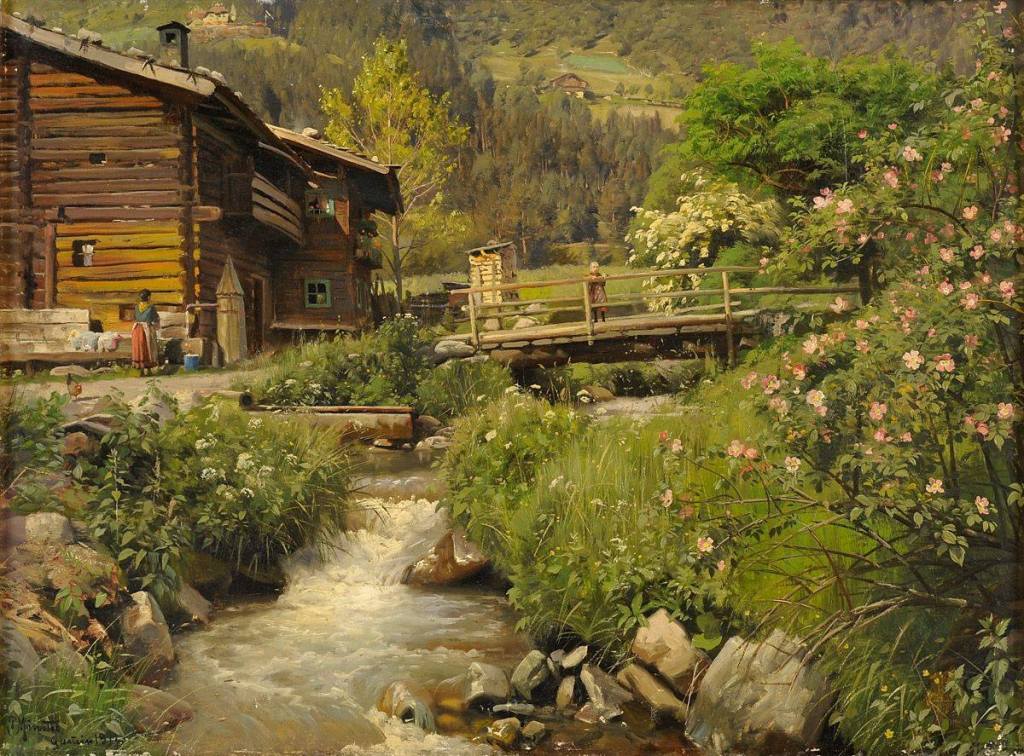
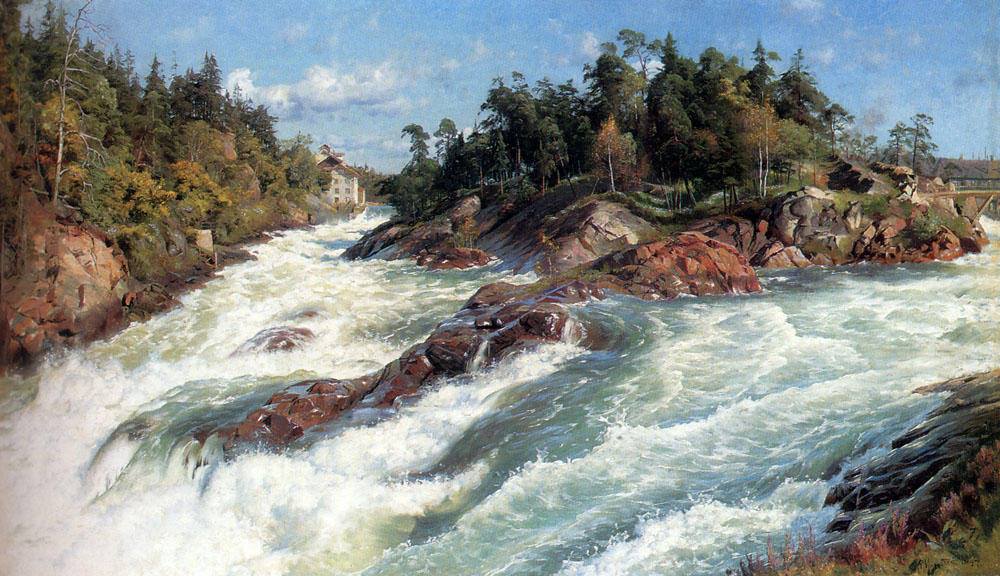
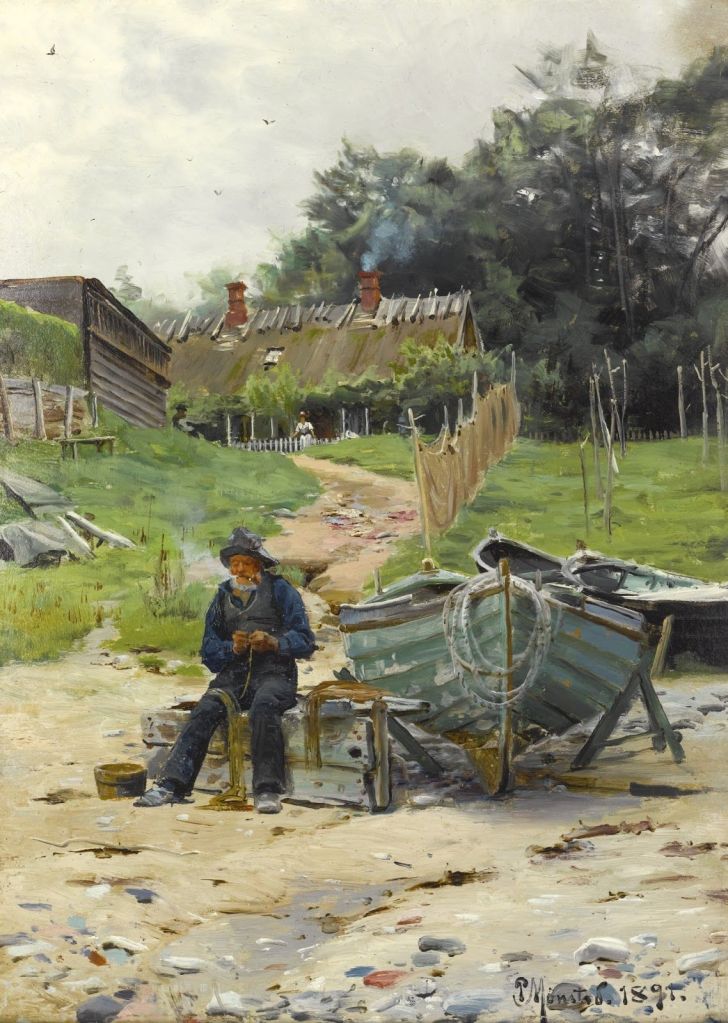
Specification: Photorealistic approach to his subjects, romantic and poetic view of nature, meticulous attention to both detail and colour.
Art genre: landscape and portraite paintings.
Education: He receive painting lessons at the art school in Aarhus. In 1875, Mønsted moved to Copenhagen, where from 1875 to 1878 he studied at the Royal Academy of Fine Arts with Niels Simonsen and Julius Exner.
In 1878 Mønsted left the Academy to study under the artist Peder Severin Krøyer.
Personal life:
He was the son of Otto Christian Mønsted, a prosperous ship-builder, and Thora Johanne Petrea Jorgensen. He had an elder brother, Niels.
On March 14th, 1889, at Frederiksberg, Peder Mork Mønsted married Elna Mathilde Marie Sommer. Nine years later the couple had a son, Tage.
Traveling which Boosts Creativity:
Mønsted travelled extensively throughout his long career, being a frequent visitor to Italy, France, Greece, Spain, Germany, Switzerland, North Africa and the Middle East..
In 1882 -1883, he spent time in Rome and Capri then, the following year, visited Paris, where he worked in the studios of William Adolphe Bouguereau (1825-1905), the famous French academic painter.
In 1884, he first visited North Africa, in 1885 his journeys took him to Sicily and Taormina
and in 1889, he went to Algeria. After that, he visited Egypt and Spain.
During his later years, he spent a great deal of time in Switzerland and travelling throughout the Mediterranean.
His travels produced numerous sketches that became paintings.
He established himself in Copenhagen and most of his landscapes and coastlines were devoted to Scandinavia.
He was especially popular in Germany, where he held several shows at the Glaspalast in Munich. In 1995, a major retrospective, called “Light of the North”, was held in Frankfurt am Main.
The artist died in Fredensborg, Denmark on June 20, 1941, aged 81.
His works can be found in museums: Chi-Mei Museum in Taiwan and the Dahesh Museum in New York, in Aalborg and Bautzen.
Most of his works are in private collections.

 Creative Vision
You must be logged in to post a comment.